A water tank rarely gets attention until there is a problem – rust in the water, recurring leaks, peeling internal surfaces, or a failed inspection. By that stage, the cost is no longer just repair. It can also mean water quality issues, service disruption, and unplanned downtime. That is exactly why grp lining for water tanks has become a practical solution for property owners and facility teams that need durability without full tank replacement.
GRP, or glass-reinforced plastic, creates a protective internal barrier that helps the tank resist corrosion, leakage, and surface deterioration. In many cases, lining an existing tank is faster and more cost-effective than removing it and installing a new one. For buildings that rely on steady water storage every day, that matters.
Why GRP lining for water tanks is used
Water tanks work in a demanding environment. Constant moisture, temperature variation, sediment, chemical exposure, and age all affect the internal surface. Steel tanks can corrode. Concrete tanks can crack or become porous. Older coatings may start to fail, blister, or contaminate stored water.
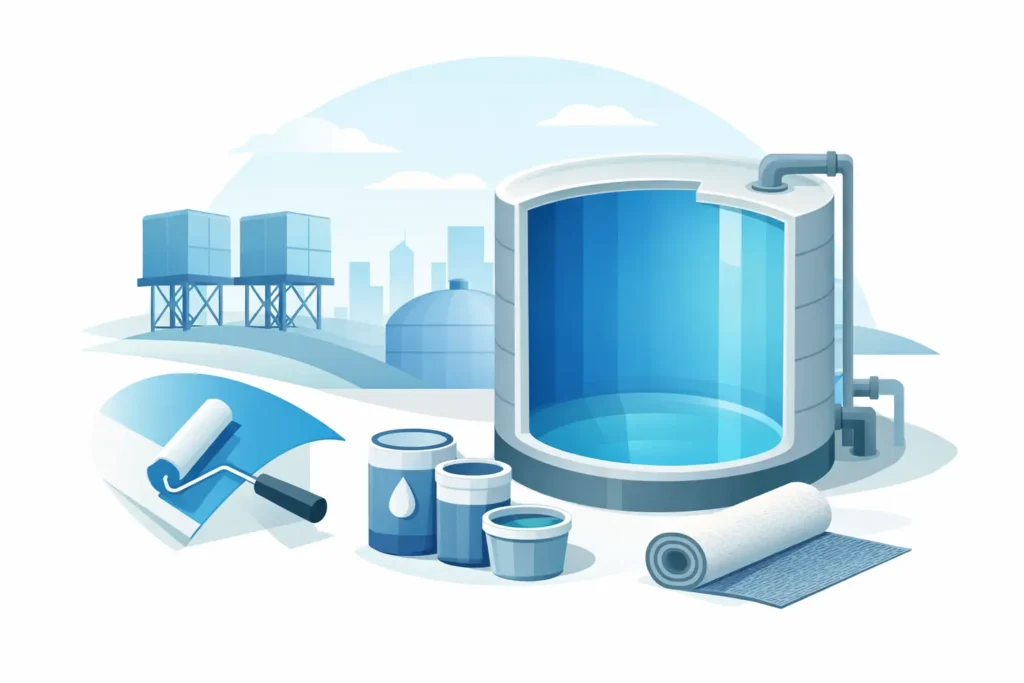
GRP lining addresses those problems by forming a tough, non-corrosive layer inside the tank. Once properly installed, it separates the stored water from the original tank substrate. That helps reduce direct contact with rust-prone metal or weakened concrete and supports better long-term performance.
For many facilities, the real value is life extension. If the structure of the tank is still sound, lining can restore serviceability without the cost and disruption of a complete replacement project. It is often a smart middle ground between minor patch repairs and total renewal.
What problems does GRP lining solve?
The most common issue is corrosion. In metal tanks, corrosion starts small and often spreads before it becomes visible from the outside. By the time staining or leakage appears, the internal damage may already be significant. GRP lining helps stop that cycle by shielding the internal surfaces.
It also helps with seepage and surface wear in concrete tanks. Concrete can absorb moisture, develop hairline cracks, and gradually lose its protective integrity. A properly applied GRP system creates a continuous internal lining that improves resistance to water penetration.
Another concern is hygiene. If existing coatings are deteriorating or internal surfaces are rough and damaged, the tank becomes harder to clean and maintain. A smooth GRP-lined finish is generally easier to inspect and service. That can support better maintenance routines and more reliable water storage conditions.
Where GRP lining makes sense
This solution is used across residential, commercial, and industrial settings. Apartment buildings, villas, hotels, schools, labor accommodations, warehouses, factories, and retail properties all depend on water storage. In these environments, replacing a tank is not always simple. Access can be limited, shutdown windows can be short, and operations may need to continue with minimal interruption.
That is where lining has a clear advantage. If the tank shell is stable and the damage is mainly internal, GRP lining can often restore the asset with less structural work. It is especially useful when the tank is located in a basement, rooftop, service yard, or plant room where removal would be difficult and expensive.
Still, it is not the right answer for every tank. If the structure has major deformation, severe failure, or unsafe conditions, replacement may be the better option. A proper site inspection is what determines that.
How the GRP lining process works
A professional GRP lining project starts with inspection. The tank condition, substrate type, damage level, access constraints, and service requirements all need to be assessed before any work begins. This step matters because surface preparation and lining design depend on the actual condition of the tank, not assumptions.
The tank is then drained, isolated, and cleaned. Any sludge, loose material, old failing coatings, rust, or contaminated residue must be removed. Surface preparation is one of the most important stages in the whole job. If the base is not properly prepared, even a good lining material can fail early.
After preparation, repairs are carried out where needed. That may include treating corroded areas, filling cracks, leveling damaged surfaces, or addressing local weak points. Only after the substrate is ready does the GRP system get applied.
The lining itself is built to create a continuous bonded barrier. Depending on the tank and specification, this may involve resin systems and reinforcement layers designed for water containment use. Corners, joints, and penetrations need particular attention because these are common failure points if workmanship is poor.
Once curing is complete, the tank is inspected and prepared for return to service. In professional applications, quality control is not optional. The performance of the tank depends not only on the material but also on installation standards, curing conditions, and finish quality.
The benefits of GRP lining for water tanks
The first benefit is asset life extension. A tank that would otherwise need major intervention can often remain in service for years longer after lining. That helps owners defer capital replacement costs while improving reliability.
The second is corrosion resistance. GRP does not behave like bare metal, which makes it well suited for internal tank protection. This is especially relevant in demanding climates where heat and moisture accelerate deterioration.
The third is reduced leakage risk. While lining is not a cure-all for every structural problem, it can help create a watertight internal surface when the tank body remains fundamentally stable. For many facilities, preventing recurring leaks is reason enough to invest in the system.
There is also a maintenance advantage. Smooth internal surfaces are easier to clean than rough, degraded ones. Over time, that can make tank upkeep more manageable and inspections more straightforward.
Finally, lining can be more practical than replacement. Tank replacement often involves demolition, disposal, access planning, new supports, installation logistics, and longer service interruption. Lining is usually less invasive.
Trade-offs and decisions that depend on the tank
Not every water tank problem should be solved with a lining system. If corrosion has already compromised the structural strength of a steel tank, or if a concrete tank has major movement or deep cracking, lining alone may not be enough. It is a protective and restorative measure, but it is not a substitute for structural integrity.
There is also the question of timing. If the tank is only lightly worn, a smaller repair approach might be adequate for now. If the tank is near the end of its service life overall, full replacement may offer better value over the long term. The right choice depends on age, condition, usage demands, and budget.
That is why experienced assessment matters. A dependable contractor should not recommend lining automatically. The better approach is to inspect the asset, identify the actual failure mode, and recommend repair, lining, or replacement based on what the tank needs.
Choosing the right contractor for tank lining work
Water storage is not an area for shortcuts. The quality of grp lining for water tanks depends heavily on preparation, material selection, workmanship, and testing. A low-cost application that skips proper cleaning or applies the system over unstable surfaces will not deliver lasting results.
Look for a contractor with experience in technical maintenance, waterproofing, and specialized restoration work. The team should understand how to manage shutdowns, confined work areas, substrate conditions, and hygiene requirements. Clear method statements, realistic timelines, and post-work inspection standards are all signs of a professional operation.
For clients managing multiple property systems, there is another practical advantage in working with a company that can coordinate related services. If the same provider understands tank access, waterproofing conditions, MEP constraints, and broader building maintenance needs, the project is usually easier to execute without gaps between trades. That is part of the value a one-stop technical partner such as Zillion Technical Services LLC brings to complex building upkeep.
When should you schedule an inspection?
If you are seeing rust-colored water, unexplained water loss, visible internal coating failure, dampness around the tank area, or a history of recurring repairs, it is time for a proper inspection. The same applies if your tank is aging and has not had a detailed internal assessment in years.
Waiting usually makes the repair more expensive. Small internal failures become larger substrate problems, and avoidable downtime becomes urgent reactive work. Early intervention gives you more options and better control over cost and scheduling.
A well-executed lining project does more than patch a problem. It helps protect water quality, extend tank life, and reduce the risk of bigger failures later. If your tank is still structurally viable, acting before the damage escalates is often the smartest move.
