





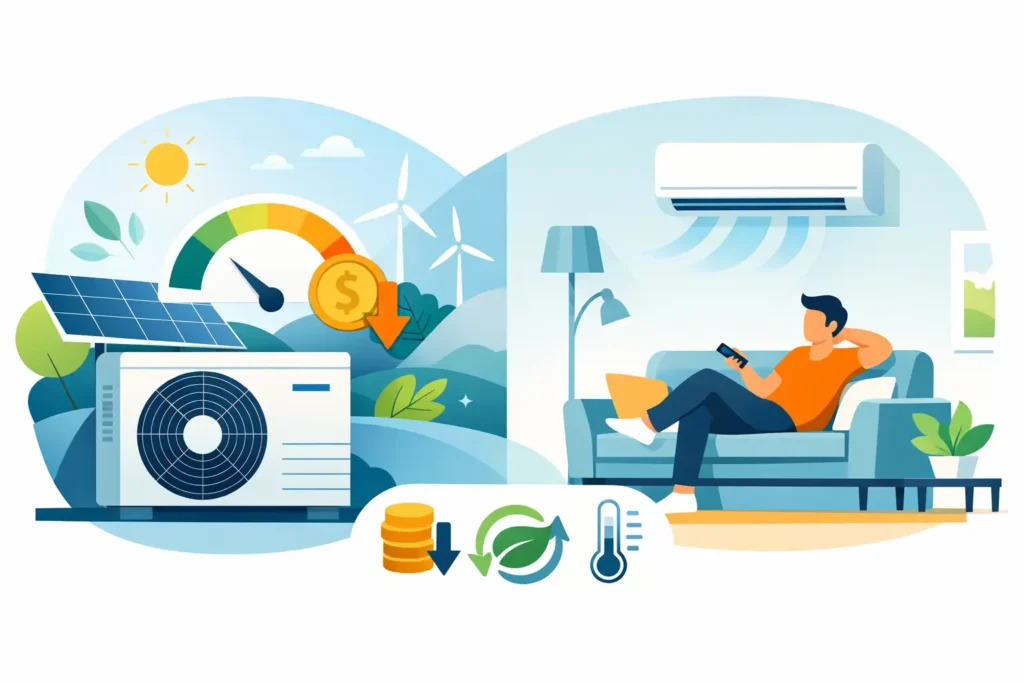
A cooling bill that climbs while rooms still feel uneven is rarely just the cost of hot weather. It is usually a sign that the AC system is running longer than necessary, moving air poorly, or fighting heat that the building envelope should be keeping out. Knowing how to reduce AC energy bills starts with treating cooling as a complete system: equipment, airflow, controls, insulation, and daily operating habits all affect the result.
For homeowners, landlords, and facility managers, the goal is not to run the thermostat at an uncomfortable temperature. It is to remove the waste that makes an air conditioner work harder than it should. The right improvements can lower consumption, protect equipment life, and make occupied spaces more consistently comfortable.
How to Reduce AC Energy Bills Through Maintenance
An AC unit cannot deliver efficient cooling when its basic service needs are ignored. Dirty filters, blocked coils, low refrigerant, loose electrical connections, and restricted condensate drainage can all increase runtime. The unit may still cool, but it uses more electricity to do it.
Start with the filter. A clogged filter restricts return airflow and forces the blower motor to work harder. In many properties, filters should be checked monthly and replaced or cleaned based on their condition, occupancy level, pets, dust exposure, and system type. A filter does not need to look completely blocked before it begins affecting performance.
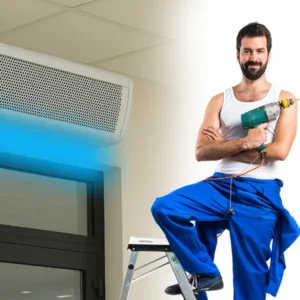
Professional servicing goes further than filter replacement. A qualified technician should inspect indoor and outdoor coils, blower components, refrigerant pressures, electrical parts, thermostat operation, insulation on refrigerant lines, and drain lines. Coil cleaning is particularly valuable because dust and grime act as insulation. When heat cannot move efficiently across the coil, the compressor runs longer to reach the same setpoint.
Do not assume that adding refrigerant is routine maintenance. Refrigerant operates in a sealed circuit. If the charge is low, there may be a leak that needs to be located and repaired. Recharging without correcting the source can create repeat costs and leave the system operating below its intended efficiency.
For commercial sites and rental properties, a planned maintenance agreement helps turn these checks into a routine rather than an emergency response. It also creates a service record that can reveal recurring faults, declining performance, or equipment nearing replacement.
Set the Thermostat for Real Occupancy
Thermostat settings have a direct effect on energy use, but the best setting depends on the building, humidity, insulation, occupancy, and local climate. Lowering the thermostat aggressively does not cool a space faster. It only tells the system to run longer.
Choose a comfortable, realistic temperature and avoid frequent manual changes throughout the day. In many cooling climates, setting the thermostat a few degrees higher when the building is empty can reduce unnecessary runtime. A programmable or smart thermostat can automate this schedule, returning the space to a comfortable setting before people arrive.
The location of the thermostat matters as much as its schedule. A thermostat near direct sun, exterior doors, kitchens, supply vents, or heat-producing equipment can read the wrong conditions and cycle the system poorly. If one area is consistently too warm or too cold, the answer may be a control or airflow issue rather than a lower temperature setting.
For facilities with different operating hours, use zones where practical. There is little value in cooling vacant meeting rooms, storage areas, or seldom-used suites to the same level as occupied offices. Zoning must be designed correctly, however. Closing too many vents or improperly configured dampers can restrict airflow and strain the system.
Improve Airflow Before Replacing Equipment
Many high bills are blamed on an aging outdoor unit when the real issue is poor air distribution. Conditioned air must travel through clean, properly sized, and well-sealed ducts before it can cool the rooms that need it.
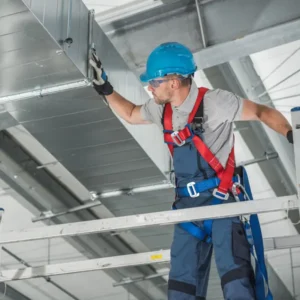
Leaking ducts can send cooled air into attics, crawl spaces, service shafts, or unoccupied ceiling voids. Gaps around supply registers, disconnected flexible ductwork, crushed ducts, and deteriorated insulation all reduce delivered cooling. A duct inspection can identify whether the system is losing air before it reaches occupied areas.
Keep supply vents open and unobstructed by furniture, curtains, boxes, or rugs. Closing vents in unused rooms may sound efficient, but many residential systems are not designed for large sections of their airflow path to be shut off. The resulting pressure imbalance can reduce efficiency and increase wear on the blower.
Ceiling fans can also improve perceived comfort by moving air across occupants. They do not lower room temperature, so they should be turned off when a room is empty. When people are present, a fan may allow a slightly higher thermostat setting without sacrificing comfort.
Stop Heat Before It Reaches the AC System
Air conditioning is only one part of the cooling equation. If a building absorbs excessive heat through its roof, windows, doors, and uninsulated walls, the AC system is constantly trying to catch up.
Inspect weatherstripping around exterior doors and operable windows. Small gaps allow hot outdoor air and humid air to enter, especially in properties with frequent door use. Seal obvious penetrations around plumbing, conduits, and cable routes where appropriate, while maintaining required ventilation and fire-safety measures.
Window coverings can make a noticeable difference in sun-exposed rooms. Blinds, shades, curtains, solar-control film, and exterior shading reduce solar heat gain during the hottest part of the day. Exterior shading is often especially effective because it blocks sunlight before it reaches the glass.
Roof and attic insulation deserve attention in single-story homes, top-floor apartments, warehouses, and commercial buildings. Heat entering from above can make upper rooms difficult to cool and keep the system running late into the evening. The correct insulation upgrade depends on roof construction, moisture control, local code requirements, and access, so it should be assessed rather than guessed.
Use Equipment More Efficiently Every Day
Small operating decisions add up over a long cooling season. Keep exterior condenser units clear of leaves, stored materials, and vegetation that block airflow. The unit needs open space around it to reject heat effectively. Do not build a tight decorative enclosure around outdoor equipment unless it is designed for proper ventilation and service access.
Reduce indoor heat sources where possible. Run dishwashers, dryers, and heat-producing equipment during cooler hours when practical. Use exhaust fans while cooking or bathing, but do not leave them running longer than needed because they remove conditioned indoor air. In commercial spaces, review lighting and equipment schedules, since unnecessary internal heat becomes another load for the AC system to remove.
If your property has older equipment, replacement may be worth evaluating, but only after the system has been assessed. A high-efficiency unit will not solve duct leakage, poor insulation, oversized equipment, or incorrect controls. In fact, an oversized AC can short-cycle, remove less humidity, and wear faster. Proper load calculations and professional installation matter as much as the efficiency rating on the equipment label.
When a Rising Bill Needs Technical Investigation
A sudden increase in electricity use, weak airflow, ice on refrigerant lines, water leaks, unusual noises, hot rooms, or repeated thermostat adjustments are reasons to arrange an inspection. These symptoms can point to simple maintenance needs, but they can also indicate mechanical, electrical, ductwork, or building-envelope problems.
A useful assessment looks beyond the outdoor unit. It checks how the entire property is using and retaining cooling, then prioritizes repairs that offer a practical return. Zillion Technical Services LLC supports this type of coordinated approach through AC servicing, duct-related work, and broader property maintenance expertise, helping clients address connected issues without managing multiple contractors.
The most reliable savings usually come from consistent attention, not one dramatic change. Keep airflow clear, maintain the equipment, control heat gain, and schedule cooling around actual use. That approach protects comfort while giving your AC system a fairer, more efficient job to do.
