

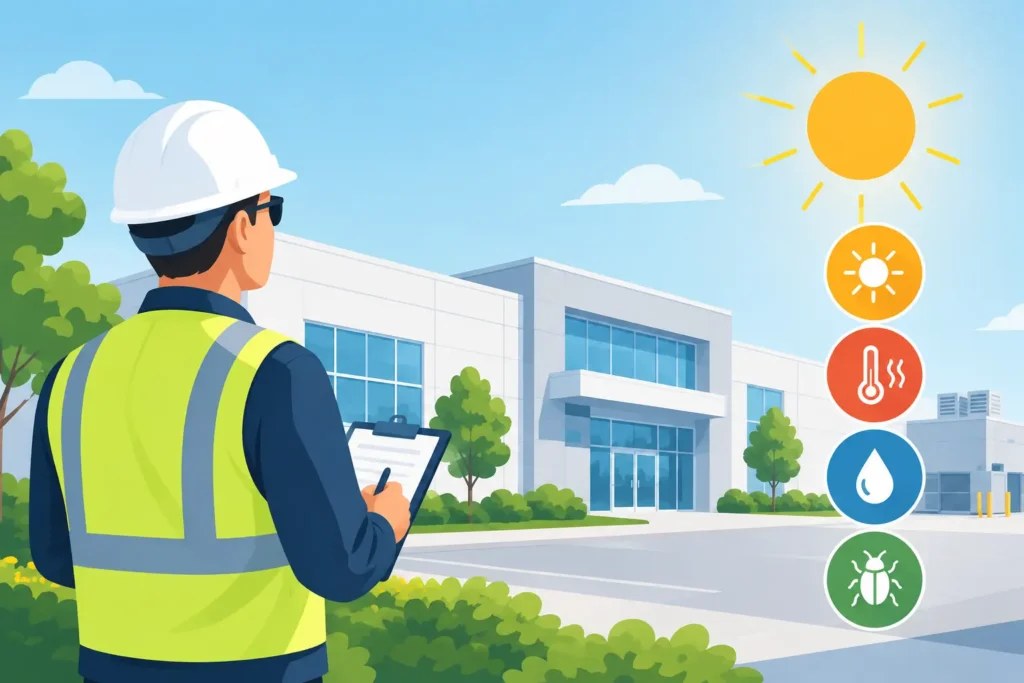
A failed air-conditioning unit at 2:00 p.m., a leak spreading beneath a roof membrane, or a pool closure during peak use can quickly become more than a maintenance issue. The top facility risks summer brings to UAE properties affect tenant comfort, operating costs, safety, and business continuity. For facility managers, landlords, and property owners, the right response is not simply arranging repairs when something breaks. It is preparing critical systems before heat, humidity, dust, and heavy daily use expose weak points.
Why Summer Places More Pressure on Facilities
Summer in the UAE creates a demanding operating environment for buildings. Cooling systems run for longer periods and under higher loads. Exterior surfaces are exposed to intense heat and UV radiation. Condensation increases around cold-water lines and AC equipment, while dust accumulation can restrict airflow and reduce equipment efficiency.
The effect is cumulative. A minor issue that may be manageable in milder weather – such as a dirty filter, a loose electrical connection, or aging sealant around a roof penetration – can turn into an urgent callout when equipment is operating at full capacity. Preventive maintenance protects more than individual assets. It helps maintain comfortable indoor conditions, preserve finishes, reduce unplanned costs, and keep occupants confident in the property.
Top Facility Risks in Summer for UAE Properties
AC overload and cooling failure
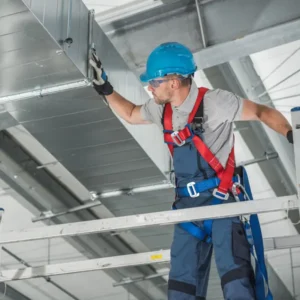
Air conditioning is usually the most critical summer asset in residential, commercial, and industrial facilities. Systems can struggle when filters, coils, ducts, drain lines, thermostats, or electrical components have not been inspected before demand rises. Blocked filters and dirty coils make units work harder to achieve the required temperature, increasing power consumption and accelerating wear.
Poor cooling is not always caused by the AC unit alone. Leaking or poorly insulated ducts, unbalanced airflow, damaged insulation, and incorrectly sized equipment can leave some rooms uncomfortably warm even when the system is running continuously. In commercial spaces, this can affect staff productivity, customer experience, stored goods, and sensitive equipment.
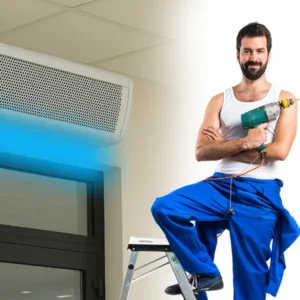
A seasonal AC service should include filter cleaning or replacement, coil cleaning, drain-line inspection, refrigerant checks where appropriate, electrical testing, airflow assessment, and thermostat verification. Duct cleaning may also be necessary where dust buildup, odor, reduced airflow, or indoor air-quality concerns are present. The correct scope depends on the building, system age, occupancy level, and maintenance history.
Condensate leaks and water damage
During prolonged cooling periods, AC systems produce large volumes of condensate. If drain pans, drain pipes, pumps, or traps are blocked or damaged, water can overflow into ceilings, walls, flooring, and electrical areas. The first sign may be a small ceiling stain, but hidden moisture can damage gypsum boards, paint finishes, insulation, and nearby fixtures.
Condensation on uninsulated chilled-water pipes and ductwork is another common summer concern. When warm, humid air meets cold surfaces, moisture forms and can drip into ceilings or service shafts. This is especially relevant in buildings with aging insulation, altered MEP layouts, or previous repair work that did not fully reinstate vapor barriers.
Routine inspection is far less disruptive than repairing extensive water damage. Technicians should test drain flow, inspect pipe insulation, confirm that condensate pumps operate correctly, and investigate any recurring ceiling marks or musty odors instead of simply repainting the affected area.
Roof, waterproofing, and exterior sealant failure
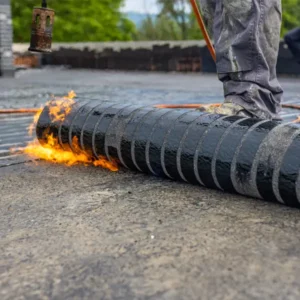
High temperatures can cause roof membranes, sealants, expansion joints, and protective coatings to deteriorate over time. Heat cycling causes materials to expand and contract. Small cracks around parapets, pipe penetrations, AC bases, skylights, and drainage points may eventually allow water ingress when rainfall occurs or when rooftop equipment is washed.
Waterproofing issues are often missed because the visible leak may appear far from the actual entry point. By the time moisture reaches an interior ceiling, it may have traveled through the slab or along service routes. This makes reactive patching unreliable unless the source is properly identified.
Facilities should inspect roof surfaces before and during summer, paying attention to blistered membranes, cracked joints, damaged flashing, standing water, and loose protective layers. Exterior wall sealants, balcony joints, and wet-area waterproofing also deserve attention, particularly in properties with a history of dampness or renovation work. Timely waterproofing repairs help protect structural finishes and avoid repeated interior restoration costs.
Electrical overheating and unplanned shutdowns
Electrical panels, breakers, cables, and connections are stressed when cooling equipment, pumps, kitchen appliances, and other loads operate for extended hours. Loose terminals and overloaded circuits generate heat, which can lead to nuisance tripping, damaged components, or more serious safety concerns.
Electrical rooms need clear access, adequate ventilation, and housekeeping controls. Dust accumulation, blocked vents, water exposure, and storage placed too close to panels increase risk. Facilities with older infrastructure or expanded occupancy should also review whether existing circuits and panel capacity remain suitable for current loads.
A qualified electrical inspection can identify hot connections, overloaded circuits, damaged insulation, earthing issues, and signs of wear before failure occurs. Thermal scanning can be valuable in larger facilities, but the most suitable inspection approach depends on the property’s electrical distribution system and operating requirements.
Swimming pool water-quality and equipment problems
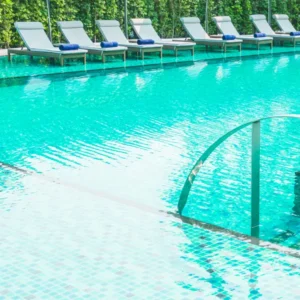
Pools receive higher use during hot weather, which places additional demands on filtration, circulation, chemical balance, and cleaning routines. High temperatures can encourage algae growth and cause sanitizer levels to fluctuate more quickly. A pool that looks clear may still have imbalanced water that irritates skin and eyes or damages equipment over time.
Pump strainers, filters, skimmers, return lines, lights, grilles, and tiles all require regular attention. Leaks, cracked tiles, damaged grouting, and worn expansion joints can create safety issues and allow water to reach surrounding structures. Pool decks also need checks for slippery surfaces, loose coping, and drainage problems.
A consistent annual maintenance contract provides a structured schedule for testing water chemistry, servicing filtration equipment, cleaning the pool, and identifying small defects before they lead to a shutdown. For hotels, communities, villas, and commercial properties, this protects both user safety and amenity value.
Indoor air quality, dust, and odor complaints
Closed windows and continuous AC use can make indoor air quality concerns more noticeable in summer. Dust-laden filters, dirty ducts, moisture in drain systems, and inadequate fresh-air circulation can contribute to odors, uneven cooling, and occupant complaints. Properties near construction activity or high-traffic areas may need more frequent filter and duct assessments.
The answer is not always a full duct-cleaning project. In some cases, replacing filters, cleaning coils, correcting drainage, or adjusting ventilation is sufficient. A proper site assessment helps determine the source of the problem and prevents unnecessary work while addressing the underlying cause.
A Practical Summer Readiness Plan
The strongest maintenance programs prioritize systems based on operational impact. Air conditioning, electrical distribution, water management, roof integrity, and pools should receive attention before cosmetic upgrades. Schedule inspections early enough to complete repairs without emergency pricing, tenant disruption, or equipment downtime.
Keep accurate records of recurring faults, service dates, replacement parts, and energy-use changes. A pattern of repeated AC leaks, breaker trips, or roof repairs usually indicates a root cause that requires more than another short-term fix. Coordinating HVAC, electrical, plumbing, waterproofing, and finishing work through one technical maintenance partner also reduces gaps between trades. For example, resolving a ceiling leak may require drainage repair, insulation work, waterproofing investigation, gypsum replacement, and repainting in the correct sequence.
Communication matters as much as technical work. Building occupants should know how to report leaks, unusual odors, weak cooling, electrical tripping, or pool concerns promptly. Early reporting gives maintenance teams a better chance of correcting a minor defect before it affects occupied areas or critical operations.
Zillion Technical Services supports planned and responsive facility maintenance across Dubai and the UAE, combining MEP support, AC service, waterproofing, pool care, renovation, and general maintenance under one dependable service approach.
Summer maintenance is most effective when it is treated as protection for the property’s daily operation, not a series of emergency repairs. Addressing weak points while systems are still functioning gives facilities more control over cost, comfort, safety, and uptime when the heat is at its highest.
