






A bathroom can look fully renovated and still fail on the details. A loose mixer, poorly aligned toilet, slow-draining basin, or improperly sealed shower tray can lead to leaks, odors, damaged finishes, and repeated repair costs. Professional sanitary ware installation services protect the function of the space as carefully as its appearance.
For homeowners, landlords, facility managers, and commercial operators in Dubai, sanitary installation is not a finishing task to leave to chance. It is a plumbing, drainage, waterproofing, and fit-out activity that needs correct planning and skilled execution from the start.
What Sanitary Ware Installation Covers
Sanitary ware includes the bathroom and washroom fixtures that support daily hygiene and water use. Depending on the property and scope of work, installation may involve toilets, wash basins, pedestal basins, vanity units, urinals, bidets, bathtubs, shower trays, shower screens, faucets, mixers, floor drains, and accessories.
The work is more involved than placing a fixture and connecting a water line. Each item must match the existing plumbing points, drain locations, water pressure, wall finish, floor level, and available clearances. A basin that is installed a few inches too high or a toilet that is not seated correctly can affect comfort, cleaning, accessibility, and maintenance for years.
In renovation projects, the condition of the concealed plumbing is equally important. Old valves, corroded connectors, cracked waste pipes, or weak waterproofing behind tiled surfaces should be addressed before new fixtures are fitted. Installing premium sanitary ware over unresolved hidden defects only delays the next repair.
Why Professional Sanitary Ware Installation Services Matter
Bathrooms and washrooms are exposed to constant moisture. Small workmanship errors can become expensive damage because water travels behind walls, under tiles, and into adjacent rooms before a visible problem appears.
A professional installation team checks the practical details that are often missed during rushed work: fixture alignment, pipe sizing, drain fall, sealing points, water pressure, access for future servicing, and the compatibility of fittings. The result is a clean finish that performs reliably under daily use.
This matters especially in rental, hospitality, office, retail, and staff accommodation properties. A leaking fixture can interrupt operations, create tenant complaints, damage ceilings below, and require emergency maintenance. Proper installation reduces avoidable callouts and helps protect the value of the property.
There is also a safety and hygiene factor. Securely fixed toilets, basins, grab rails, and shower components are essential in high-use spaces. Correct water connections and drain seals help prevent leaks, unpleasant odors, and unsanitary conditions.
The Right Installation Starts Before the Fixture Arrives
The best sanitary ware installation begins with a site assessment. Before selecting or fitting any item, the technician should confirm the location of hot and cold water lines, waste outlets, floor drain positions, wall conditions, and finished floor levels.
This assessment determines whether the selected fixture will fit without compromise. A wall-hung toilet, for example, may require a concealed frame and sufficient wall depth. A freestanding bathtub needs proper drainage access and a floor that can support its weight. A vanity basin may require adjustments to drainage height so that plumbing does not interfere with drawers or storage.
Measurements should be taken after considering the final tile thickness, not only the unfinished wall or floor. This is a common source of misalignment in bathroom renovations. Even a small difference in finished levels can affect the position of a floor-mounted toilet, shower slope, or basin waste connection.
For commercial washrooms, planning should also account for user flow, cleaning access, durability, and the number of fixtures required. The most attractive product is not always the most practical choice for a high-traffic environment.
Key Steps in a Quality Installation
A dependable installation process follows a clear sequence. First, existing fixtures are removed carefully and concealed plumbing is inspected. Any necessary repairs to pipes, valves, drain lines, or waterproofed areas should be completed before new sanitary ware is installed.
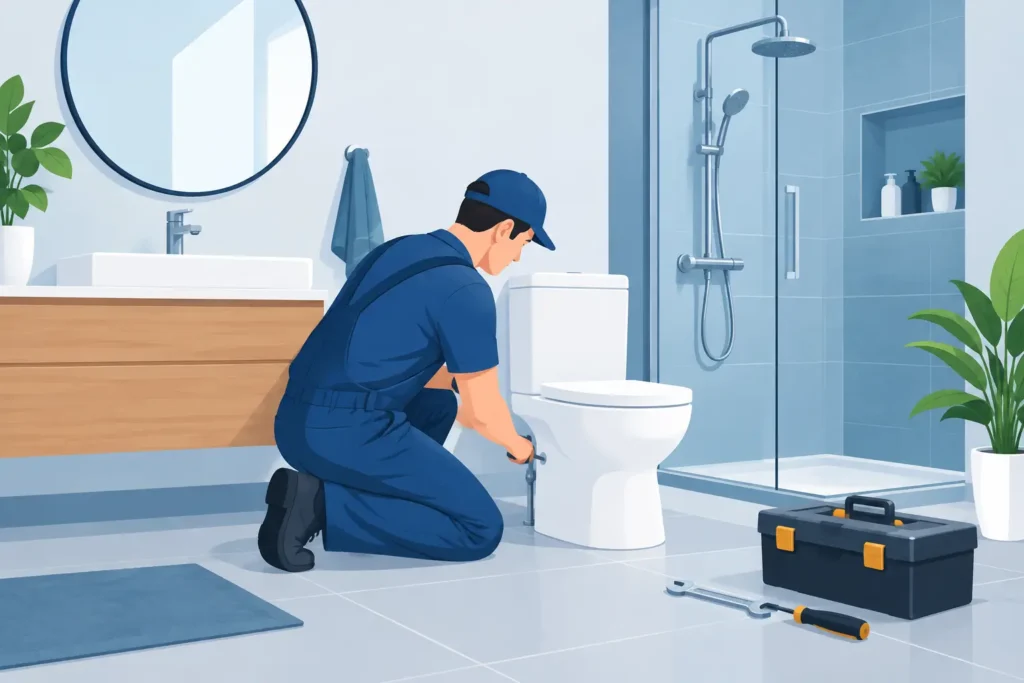
Next, the team marks fixture locations and confirms levels. Toilets, basins, shower trays, and bathtubs must sit squarely and at the correct height. Water supply connections are then installed using suitable fittings, while waste lines are positioned to allow efficient drainage without stress on pipes or connectors.
Sealing is completed only after fixtures are secure and tested. Silicone around a basin, bathtub, or shower tray is not a substitute for correct plumbing. Its purpose is to prevent surface water from entering gaps between the fixture and finished wall or floor.
The final stage is testing. Each water connection should be checked under pressure, drains should be tested for flow and leakage, and all mounted items should be inspected for stability. A professional handover should leave the work area clean, the fixture protected, and the client informed of any maintenance considerations.
Common Problems Caused by Poor Installation
Poor-quality installation often becomes visible quickly, but some faults develop slowly. A rocking toilet may indicate an uneven floor, incorrect fixing, or a problem at the waste connection. A basin that drains slowly may have poor pipe alignment or inadequate fall. Persistent dampness around a shower tray can point to failed seals, incorrect waterproofing, or a drainage issue beneath the surface.
Other common problems include mixers installed at uneven heights, loose wall-mounted basins, exposed pipework that interferes with cabinetry, and poorly positioned accessories that make daily use uncomfortable. In older properties, connecting new fixtures to weak or incompatible existing plumbing can create recurring leaks.
These issues are not always solved by applying more sealant or replacing a single fitting. The correct repair may require opening part of the finish, realigning the fixture, changing the connector, or repairing the concealed line. This is why experienced assessment before installation saves both time and disruption.
Choosing Fixtures for the Property Type
Sanitary ware should suit the way the property is used. A private villa bathroom may prioritize design, comfort, and a coordinated finish. A rental apartment may need durable fixtures that are easy to clean and straightforward to replace. Offices and retail locations usually benefit from water-efficient, hard-wearing fixtures designed for regular use.
Material quality matters, but compatibility matters just as much. The dimensions of a toilet outlet, basin waste, faucet connection, and shower valve must work with the available plumbing. Imported fixtures can sometimes require special adapters or nonstandard installation arrangements. Reviewing specifications early avoids delays once tiles and finishes are complete.
Water efficiency is another practical consideration. Dual-flush toilets, controlled-flow faucets, and properly selected mixers can help reduce unnecessary consumption. However, low-flow fixtures must be matched with suitable water pressure and drainage performance. The right choice depends on the building system, not only on the product label.
Coordinating Installation With Renovation Work
Sanitary work is closely connected to tiling, waterproofing, painting, electrical work, and cabinetry. When separate contractors work without coordination, the result can be delayed handovers, damaged finishes, and expensive rework.
For example, waterproofing should be completed and tested before tiles are laid in wet areas. Tile openings for pipes and fixtures must be cut accurately. Electrical provisions may be needed for illuminated mirrors, water heaters, sensor faucets, or exhaust systems. Vanity units should be installed with enough clearance for isolation valves and future plumbing repairs.
Using one technical partner for connected renovation and maintenance tasks simplifies responsibility. Zillion Technical Services LLC can coordinate sanitary installations alongside tiling, waterproofing, bathtub reglazing, fit-out work, and general maintenance, helping property owners avoid the confusion of managing multiple vendors.
When Repair Is Enough and When Replacement Makes Sense
Not every sanitary problem requires a full replacement. A dripping faucet may need a cartridge or seal replacement. A loose toilet seat, damaged flush mechanism, or worn basin waste can often be repaired quickly. Reglazing may also restore the appearance of selected bathtubs and sanitary surfaces where the base material remains sound.
Replacement becomes the better option when a fixture is cracked, repeatedly leaking, severely stained, unstable, or incompatible with the plumbing arrangement. It can also make sense during a larger renovation, when access to concealed pipes is already available and fixtures can be upgraded without creating additional disruption later.
The most cost-effective decision depends on condition, availability of spare parts, property use, and the expected life of the existing fixture. A qualified technician can identify whether a targeted repair will provide reliable service or simply postpone a more significant issue.
A well-installed basin, toilet, bathtub, or shower system should feel simple to use because the technical work behind it has been done properly. Before approving the next bathroom upgrade or washroom repair, make sure the scope includes careful inspection, correct fitting, full testing, and workmanship designed to last.
