





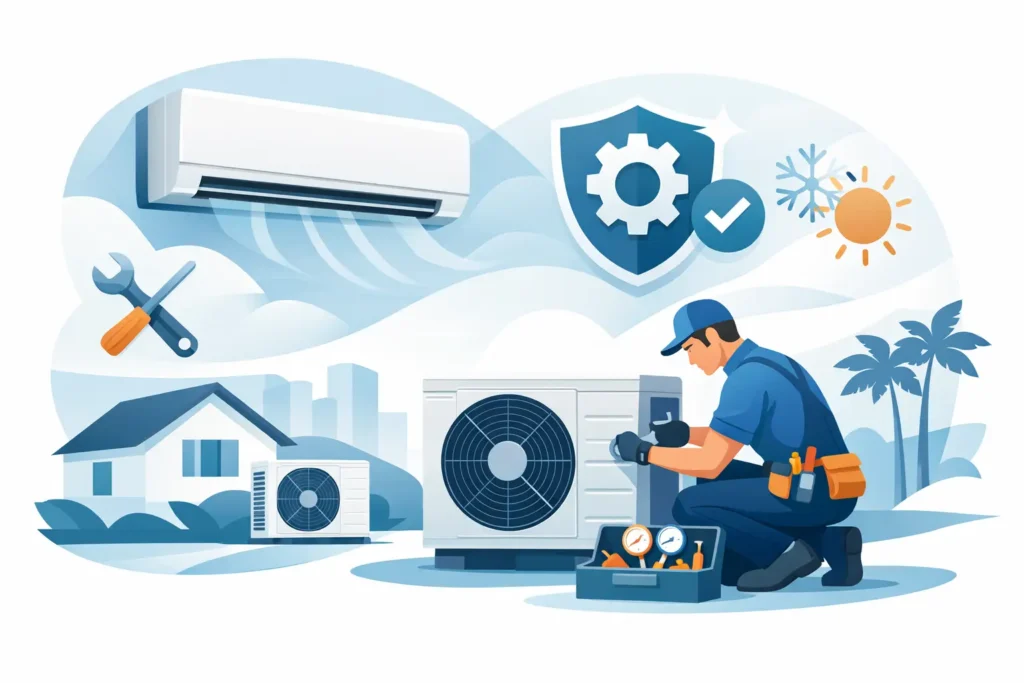
When an AC system starts underperforming, the problem rarely stays small for long. Weak airflow, uneven cooling, rising utility bills, and repeated shutdowns usually point to a bigger issue with system condition, sizing, or installation quality. That is why ac service and installation should never be treated as a basic checkbox. It directly affects comfort, operating cost, equipment life, and day-to-day reliability.
For property owners, facility managers, landlords, and commercial operators, the real concern is not just whether the unit turns on. The concern is whether the system can handle demand consistently, especially under heavy use, without creating avoidable maintenance costs. A well-planned service approach and a correctly executed installation help prevent emergency breakdowns and keep indoor spaces stable, clean, and usable.
Why ac service and installation matter more than most people expect
Air conditioning systems are expected to do a lot. They regulate temperature, support indoor air quality, manage humidity, and help protect interiors, equipment, and occupant comfort. When one part of the system is neglected, the impact spreads quickly.
A clogged filter can restrict airflow and force the unit to work harder. Dirty coils can reduce cooling efficiency. Low refrigerant can lead to poor performance and long run times. Faulty drainage can create moisture problems that affect ceilings, walls, or surrounding finishes. Poor installation can make even a new unit perform below standard from the first day of operation.
This is where many avoidable costs begin. A system that is too small will struggle to keep up. A system that is too large may cycle too often and wear out faster. Duct issues, poor insulation, bad thermostat placement, and weak commissioning can all reduce performance even when the equipment itself is technically new.
What good AC service actually includes
Many people hear the word service and think of a quick cleaning visit. Proper servicing is more detailed than that. It should combine inspection, testing, cleaning, and performance review so that small defects are identified before they become shutdowns.
A thorough service visit usually includes checking filters, evaporator and condenser coils, drain lines, electrical components, refrigerant condition, thermostat calibration, airflow, and overall system response. The technician should also look for signs of wear, unusual noise, vibration, leakage, and any mismatch between how the system is designed to perform and how it is currently operating.
For homes, this helps maintain steady comfort and avoid surprise repairs during peak demand. For commercial and mixed-use properties, it also protects business continuity. Restaurants, offices, retail spaces, and residential buildings all depend on stable cooling to keep people comfortable and operations running normally.
It also matters how often service is performed. Some sites can manage with scheduled periodic maintenance, while others need more frequent attention due to heavy usage, dust exposure, occupancy patterns, or equipment age. There is no single schedule that fits every property. The right plan depends on actual site conditions.
When repair is enough and when replacement makes more sense
Not every AC issue means the system must be replaced. In many cases, targeted repairs and routine maintenance can restore performance effectively. If the unit is relatively new, the repair history is limited, and the system was originally installed correctly, servicing may be the most practical option.
Replacement becomes more reasonable when breakdowns are frequent, cooling is inconsistent across the space, parts are failing repeatedly, or operating costs keep climbing. Age also matters, but age alone should not make the decision. A well-maintained system can often outlast expectations, while a poorly installed system may create problems much earlier.
The better question is whether the current setup still delivers reliable performance at a sensible cost. If maintenance is becoming reactive instead of planned, or if tenants and occupants are regularly reporting comfort issues, installation of a new system may be the more efficient long-term decision.
AC installation is only as good as the planning behind it
One of the most common mistakes in AC projects is focusing only on the equipment brand or tonnage. Those details matter, but they do not replace proper system planning. Good installation starts with understanding the space, usage pattern, heat load, ventilation requirements, and duct layout.
A technician or contractor should evaluate room size, insulation, sun exposure, occupancy, ceiling height, and the function of the space. A residential bedroom does not have the same cooling profile as a commercial kitchen, server room, retail unit, or large open office. Installing the wrong type of system can lead to comfort complaints from the beginning.
Duct design is another major factor. If ducts are poorly routed, leaking, undersized, or dirty, cooling performance will suffer no matter how advanced the unit may be. Air distribution has to be balanced correctly across the property. Otherwise, one area becomes too cold while another remains warm.
Commissioning is equally important. After installation, the system should be tested under operating conditions. Airflow, thermostat response, drainage, refrigerant behavior, electrical load, and overall cooling output all need to be checked. Skipping this step often leads to callbacks, avoidable strain, and underperformance that could have been corrected immediately.
What property managers and owners should look for in a contractor
Choosing a contractor for ac service and installation should not come down to price alone. Fast, low-cost work can become expensive if the job has to be corrected later. What matters is technical capability, response time, workmanship, and the ability to support the system after the initial visit.
A dependable contractor should be able to assess the problem clearly, explain the practical options, and recommend work based on performance needs rather than guesswork. Certified technicians, documented procedures, and a service team that can handle both scheduled maintenance and urgent issues make a real difference over time.
This is especially relevant for clients managing multiple assets. Coordinating separate vendors for HVAC, repairs, waterproofing, interior maintenance, and other technical needs often creates delays and communication gaps. Working with one service partner that understands the property as a whole can reduce downtime and simplify maintenance planning. That is one reason many clients prefer a one-stop support model from companies such as Zillion Technical Services LLC.
How regular service protects long-term asset performance
Air conditioning is not an isolated building function. It affects interior finishes, moisture levels, occupant comfort, and even the perceived standard of a property. In rental units and commercial spaces, poor cooling can lead to complaints, turnover issues, and lost confidence in facility management.
Regular service helps protect more than the AC unit itself. It reduces stress on connected components, limits the chance of water damage from blocked drains or leaks, and supports cleaner indoor conditions. In business environments, it can also help reduce disruption to staff, customers, and equipment.
There is also an energy angle. Systems that are clean, balanced, and operating at the right settings typically use less energy than systems struggling with airflow restrictions or mechanical faults. Savings vary by site, and no responsible contractor should promise the same outcome everywhere, but better maintenance usually improves efficiency compared with neglect.
A practical approach to better cooling performance
The most effective AC strategy is usually straightforward. Service systems before they become unstable. Investigate recurring issues instead of resetting the thermostat and hoping for the best. When installation is needed, base it on actual site requirements, not assumptions.
For homeowners, that may mean seasonal inspections and prompt attention to weak airflow or unusual noise. For landlords and facility managers, it often means planned maintenance, documented service history, and faster decision-making when a system is no longer cost-effective to keep repairing.
Reliable cooling does not happen by accident. It comes from correct sizing, skilled installation, consistent servicing, and a contractor who treats performance as a technical responsibility, not a quick transaction.
If your current system is struggling, or if a new project requires dependable climate control from day one, the right move is to address it early. A properly maintained and properly installed AC system does more than cool a space. It keeps the property functioning the way it should.

Pingback: Air Curtain Installation Service for UAE Entrances - zillion