







A properly planned air curtain installation service can make a noticeable difference at a busy entrance. Each time a door opens, hot outdoor air, dust, humidity, insects, and vehicle fumes can enter the building. In Dubai and across the UAE, that puts extra pressure on air-conditioning systems and affects comfort at reception areas, retail entrances, restaurants, warehouses, and villas.
An air curtain creates a controlled stream of air across an open doorway. It does not replace an AC system or a physical door, but it helps separate indoor and outdoor environments while people, trolleys, and deliveries move through the entrance. The result is a cleaner, more comfortable entry point with less loss of cooled air.
What an Air Curtain Does at Your Entrance
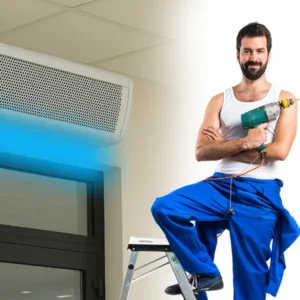
Air curtains are installed above or beside door openings and discharge a directed air stream downward or across the opening. When sized and positioned correctly, this air stream limits the exchange between conditioned indoor air and the harsh external environment.
For commercial properties, the immediate benefit is often comfort. Customers and staff near the entrance are less exposed to blasts of hot air whenever automatic doors open. For food outlets, clinics, showrooms, and retail spaces, an air curtain can also help reduce the entry of dust, flying insects, and outdoor odors.
The energy benefit matters as well, although it depends on the door type, opening frequency, unit selection, and HVAC design. An air curtain cannot compensate for a poorly maintained AC system, damaged door seals, or doors left open unnecessarily. It is most effective as part of a well-managed entrance and cooling strategy.
When an Air Curtain Installation Service Is Worth It
The right application is usually an entrance with frequent traffic or long periods of open-door operation. Sliding glass doors at shops, supermarket entrances, loading bays, restaurant kitchens, and building lobbies are common examples. Properties that experience noticeable heat gain, dust entry, or uncomfortable drafts around doors may also benefit.
For a small office with a door that opens only occasionally, the value may be more limited. In that case, repairing door closers, improving weather seals, or adjusting the AC distribution may solve the issue at a lower cost. A professional assessment should identify the actual source of the problem before recommending equipment.
Air curtains are also useful in facilities where cleanliness and temperature control support daily operations. This includes pharmacies, salons, gyms, clinics, food preparation areas, warehouses, and industrial units. The unit must suit the environment. A standard commercial model may not be appropriate for a dusty workshop, a humid service area, or a high-clearance loading entrance.
Correct Sizing Is More Important Than Unit Capacity Alone
A common mistake is selecting an air curtain based only on the width of the doorway. Width is essential, but installation height, door operation, wind exposure, and the difference between indoor and outdoor pressure also affect performance.
The air stream must reach the floor or the intended stopping point with enough force to form an effective barrier. If a unit is installed too high, undersized for the opening, or set at the wrong fan speed, it may look operational while providing limited protection. Conversely, an oversized unit can create excessive noise or an uncomfortable draft for people entering the property.
Technicians should measure the clear opening width and height, inspect the available mounting area, and review the electrical supply. They should also consider whether the entrance is recessed, directly exposed to wind, fitted with sliding doors, or used for deliveries. These details determine the required air volume, mounting position, and control method.
Ambient, Heated, and Specialized Units
Most UAE commercial entrances use ambient air curtains that recirculate indoor air without heating it. Their purpose is to contain cooled air and reduce contamination from the exterior. Heated air curtains are generally more relevant to cold climates, though specialized applications may have different requirements.
Some sites need features such as corrosion-resistant finishes, washable filters, higher air velocity, remote controls, door sensors, or integration with automatic doors. For a restaurant or retail unit, quiet operation may be a priority. For a warehouse, durability and coverage at a larger opening may matter more. The best unit is the one matched to the real operating conditions, not simply the highest-capacity model available.
What Professional Installation Should Include
A dependable installation begins before the unit reaches the site. The technician should confirm dimensions, select a safe mounting point, and ensure the airflow will not be blocked by signage, ceilings, lighting, door tracks, or structural beams. The unit must be securely fixed because vibration, poor anchoring, and incorrect alignment can reduce its service life.
Electrical work should be completed using the correct cable size, isolator arrangement, and circuit protection for the selected model. Controls should be practical for the people using the entrance. Depending on the application, the air curtain may run continuously during business hours, operate through a wall switch, or activate automatically when the door opens.
After mounting, the unit needs commissioning. This means checking fan operation, airflow direction, speed settings, noise levels, and coverage across the full doorway. The discharge angle may need adjustment to counter exterior air movement and achieve a consistent barrier. A quick switch-on test is not enough. The installation should be evaluated under normal door-use conditions.
For properties already managed under an annual maintenance contract, air curtain work can be coordinated with AC, electrical, and general maintenance activities. This reduces the need to arrange separate site visits and helps ensure the entrance equipment works alongside the wider building systems.
Avoid These Installation Problems
Poor performance is often caused by installation decisions rather than a defective unit. Mounting an air curtain off-center leaves gaps at the side of the opening. Installing it behind a deep ceiling bulkhead can disrupt airflow before it reaches the doorway. Choosing a unit that does not cover the full width allows hot air and dust to pass around the barrier.
Another issue is connecting the unit without considering door controls. If it runs all day at maximum speed when the entrance is closed most of the time, the property may incur unnecessary electrical use and equipment wear. If it is activated too late after the door opens, it may not provide meaningful protection during peak traffic.
Maintenance is equally important. Dust buildup on intake grilles and internal components can restrict airflow, increase noise, and reduce efficiency. Periodic cleaning, electrical checks, and inspection of mounting hardware help keep the unit reliable. Sites with heavy dust exposure or continuous operating hours may need more frequent servicing than low-traffic offices.
Choosing a Contractor for Air Curtain Work
The contractor should be able to assess more than the doorway. Air curtain performance is closely connected to air-conditioning load, entrance layout, electrical capacity, and property usage. A technical team that also understands AC and duct systems, electrical support, fit-out work, and ongoing maintenance can identify issues that a single-product installer may overlook.
Ask whether the proposed unit matches the doorway height and width, how it will be controlled, where it will be mounted, and what maintenance it will require. Clear answers indicate that the recommendation is based on site conditions rather than a standard package.
Zillion Technical Services LLC provides air curtain installation as part of broader property maintenance and technical contracting support in Dubai and the UAE. This approach is especially useful for owners and facility managers who need entrance improvements coordinated with AC servicing, electrical work, renovations, or recurring maintenance requirements.
A well-installed air curtain is a practical addition, not a cosmetic fixture. When the unit is selected for the opening, commissioned correctly, and maintained as part of the property’s technical upkeep, it can help keep the entrance more comfortable, cleaner, and easier for the cooling system to manage.
