




A small damp patch behind a sofa or a faint bubble in painted drywall can look like a cosmetic issue. Often, it is the first visible warning that water has already moved behind the finish. Knowing the top signs wall waterproofing failure helps property owners and facility managers act before moisture damages plaster, paint, insulation, electrical components, or adjacent rooms.
Wall waterproofing is not a one-time concern. Exterior walls, wet-area walls, balconies, parapets, and foundation-adjacent areas are exposed to weather, temperature changes, plumbing leaks, and building movement. In high-use properties, a delayed repair can quickly become a larger restoration project.
Why Wall Waterproofing Failure Needs Quick Attention
Water follows the easiest available path. It may enter through a hairline crack, failed sealant joint, damaged membrane, open penetration around a pipe, or weak connection between a wall and roof or floor slab. Once it reaches the wall system, it can travel beyond the original entry point.
This is why the visible stain is not always the source of the problem. A patch near a window may be linked to failed exterior sealant above it. Moisture in a bathroom wall may come from a compromised waterproofing layer behind tile, not from the tile grout itself. Proper diagnosis protects the building fabric and prevents repeated surface repairs that do not address the cause.
Top Signs of Wall Waterproofing Failure
1. Damp Patches That Return After Painting
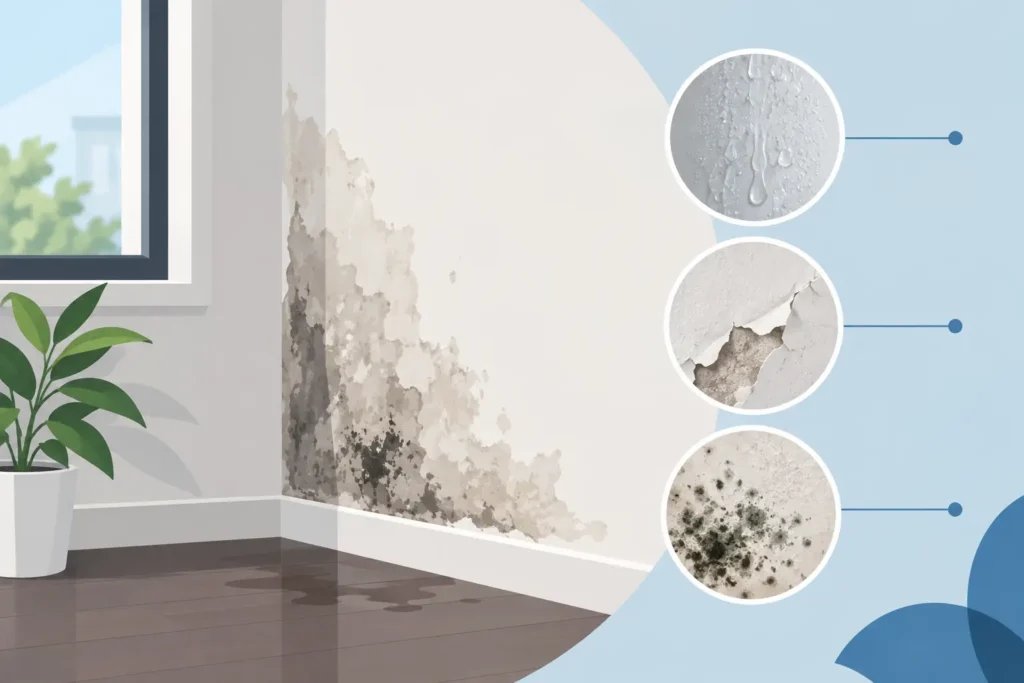
A recurring damp patch is one of the clearest signs of water intrusion. The area may darken after rain, after using a shower, or when an air-conditioning drain line is operating. Painting over it may improve appearance briefly, but the stain often returns because the wall remains wet beneath the coating.
Check whether the patch changes in size or color over time. A stable, old stain may be linked to a past issue, but a spreading patch requires investigation. The repair should identify whether the water is entering from outside, through plumbing, or from a neighboring wet area.
2. Bubbling, Peeling, or Flaking Paint
When moisture becomes trapped behind paint, the coating loses adhesion to the wall. It may form blisters, peel in sheets, crack, or develop a powdery surface. This is especially common on exterior-facing walls and in bathrooms, kitchens, pool areas, and utility rooms.
Paint failure does not automatically mean the waterproofing system has failed. Poor surface preparation or incompatible paint can also cause peeling. However, if the affected wall feels cool or damp, shows staining, or deteriorates repeatedly, moisture testing and waterproofing assessment are the right next steps.
3. Efflorescence or White Salt Deposits
White, chalky deposits on concrete, masonry, grout, or blockwork are called efflorescence. They form when water moves through mineral-based materials, carries dissolved salts to the surface, and evaporates. The residue can often be brushed away, but it will return if water continues to pass through the wall.
Efflorescence is common on external walls, basement areas, retaining walls, and balcony structures. It is not just a cleaning issue. It indicates a moisture pathway that should be sealed and protected before the wall finish begins to break down.
4. Musty Odors, Mold, or Mildew Growth
A persistent musty smell in a room can indicate concealed moisture even when no major stain is visible. Mold and mildew thrive where ventilation is limited and moisture remains in wall cavities, behind wardrobes, under wall coverings, or around window reveals.
Dark spots on paint, wallpaper, silicone joints, or ceiling-wall corners need prompt attention. Cleaning the visible growth is necessary, but it is not a complete solution. The area must be dried, the source of moisture corrected, and affected finishes assessed for safe restoration.
5. Cracks in Walls, Render, or Sealant Joints
Not every crack allows water into a building, but cracks around windows, doors, parapets, expansion joints, pipe penetrations, and wall-to-slab connections deserve close inspection. Building movement, thermal expansion, and aging sealants can create openings that allow rainwater or wash water behind the façade.
Hairline cracks may be repairable with the correct flexible sealant or protective coating. Wider cracks, recurring cracks, or cracks accompanied by dampness may point to movement or substrate failure. In those cases, a repair plan should account for both the crack and the waterproofing layer around it.
6. Soft, Swollen, or Deteriorating Interior Finishes
Drywall that feels soft, baseboards that swell, plaster that sounds hollow, and tiles that loosen are all signs that moisture has been present long enough to damage materials. These symptoms can appear well after the initial leak or membrane failure.
Do not assume that replacing the damaged board, plaster, or tile will solve the problem. The wall should be opened or tested where needed, fully dried, and waterproofed before finishes are reinstated. Otherwise, the same damage can return behind new materials.
7. Rust Around Metal Fixtures and Wall Penetrations
Corrosion around screws, access panels, electrical boxes, metal frames, or pipe sleeves is another useful warning sign. Moisture may be entering through gaps around these penetrations or collecting inside the wall assembly.
This issue deserves added care near electrical systems. If water is suspected near outlets, switches, lighting connections, or control panels, isolate the affected circuit where appropriate and arrange a qualified inspection. Waterproofing and MEP repairs often need to be coordinated so the final repair does not leave unsealed openings.
Common Reasons Waterproofing Systems Fail
Waterproofing failure usually develops from a combination of age, exposure, installation quality, and missed maintenance. Membranes can crack or lose adhesion. Sealants harden and pull away from joints. Drainage faults can force water toward walls instead of away from them. Roof, balcony, and façade defects can also direct water into vulnerable connections.
In wet areas, failures are often hidden behind tile. Damaged grout alone may not be the root cause, but open grout lines and failed silicone joints can allow water to reach weak spots in the substrate. For exterior walls, UV exposure, heat cycles, and unsealed cracks place continuous stress on coatings and joint sealants.
The right repair depends on the source. A leaking pipe needs plumbing repair before wall restoration. A façade crack may need crack treatment, sealant renewal, and an external waterproof coating. A shower wall may require removal of finishes and replacement of the underlying waterproofing system. Applying a surface coating without correcting the moisture path can trap water and create more damage.
What to Do When You Notice the Warning Signs
Start by documenting the area with photos and noting when the issue appears. Does it worsen after rainfall, cleaning, shower use, or AC operation? This information helps narrow down the likely source and avoids unnecessary demolition.
Avoid simply repainting, caulking over an active wet area, or covering the patch with furniture. These actions can hide the symptoms while moisture continues to damage the wall. If mold is visible, keep the area ventilated and avoid disturbing large affected sections until they can be assessed properly.
A professional inspection should trace the water route, evaluate the wall condition, check nearby joints and penetrations, and recommend the appropriate repair scope. Depending on the situation, this may include moisture testing, plumbing checks, crack repair, membrane application, sealant replacement, drainage correction, and reinstatement of paint, tile, or plaster.
For properties that need coordinated support across waterproofing, painting, plumbing, and general maintenance, Zillion Technical Services LLC can help manage the repair as one integrated scope. This reduces handoffs between contractors and helps ensure that the final finish is applied only after the moisture issue has been corrected.
A dry wall is not just a better-looking wall. It protects finishes, indoor comfort, and the long-term condition of the property. Address the first recurring sign early, and the repair is usually more controlled, less disruptive, and far more durable.
