



A leaking pipe behind a finished wall, an AC unit losing performance in peak heat, cracked grout around wet areas, or a pool system that stops circulating properly – most property problems do not start as emergencies. They become expensive because they are missed, delayed, or handed to the wrong contractor. That is why general building maintenance services are not just a support function. They are a practical way to protect property value, reduce disruption, and keep buildings operating as they should.
For property owners, facility managers, landlords, and commercial operators, the real issue is rarely one isolated repair. It is coordination. Buildings need HVAC attention, waterproofing, painting, tile work, sanitary repairs, electrical checks, and routine upkeep at different times and with different levels of urgency. Managing several vendors often leads to delays, unclear accountability, and inconsistent workmanship. A one-stop maintenance partner solves a large part of that operational burden.
What general building maintenance services actually cover
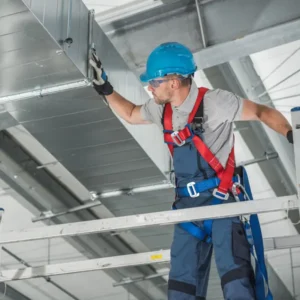
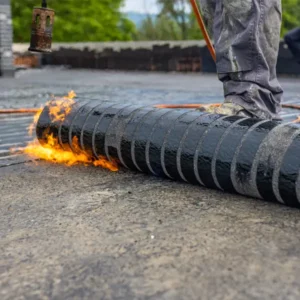
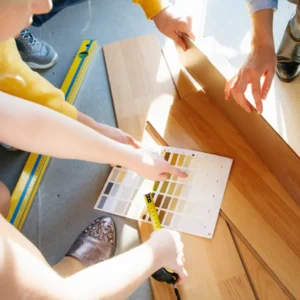
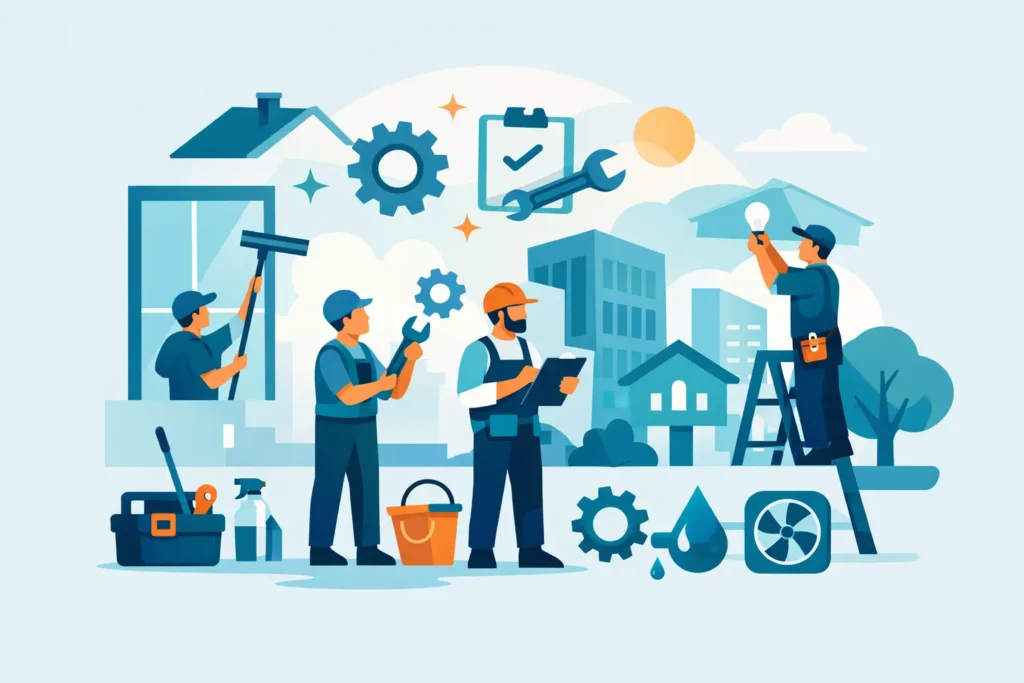
General building maintenance services typically include the recurring and corrective work needed to keep a building functional, safe, clean-looking, and cost-efficient over time. That can range from AC servicing and duct work to plumbing repairs, electrical maintenance, waterproofing, painting, minor civil works, tile repairs, pool system support, and renovation-related upgrades.
The exact scope depends on the type of property. A residential villa may need seasonal AC servicing, bathroom reglazing, exterior painting, and roof waterproofing. A commercial property may prioritize preventive inspections, MEP support, common-area upkeep, and fast-response repairs that minimize tenant complaints or business interruption. Industrial sites often need a more structured maintenance approach tied to equipment performance, safety, and uptime.
This is why broad technical coverage matters. Buildings do not fail by category. Moisture can affect paint, ceilings, electrical systems, flooring, and indoor air quality at the same time. Poor ventilation can raise cooling costs and affect occupant comfort. A cracked tile in a wet area can point to deeper substrate or waterproofing issues. When one contractor can assess related systems together, the response is usually faster and more accurate.
Why preventive maintenance saves more than reactive repairs
Reactive maintenance feels efficient at first because you only spend when there is a visible problem. In practice, it often costs more. Emergency callouts are disruptive, hidden damage spreads, and short-term fixes can turn into repeat visits.
Preventive maintenance changes that pattern. Scheduled inspections and servicing help identify wear before systems fail. AC units run more efficiently when filters, coils, drains, and ducts are checked regularly. Waterproofing issues are easier to correct when caught at the first signs of seepage instead of after finishes are damaged. Pool maintenance is simpler when chemical balance, circulation, and lining conditions are monitored consistently instead of after water quality drops or leaks appear.
That does not mean every property needs the same maintenance frequency. A high-traffic commercial facility, a rental portfolio, and an owner-occupied home have different risk profiles. The right schedule depends on occupancy, system age, building use, and exposure to heat, moisture, and heavy wear. What matters is having a maintenance plan based on actual building needs rather than waiting for avoidable failures.
The UAE climate makes maintenance more demanding
In hot climates, building systems work harder for longer periods. Cooling equipment runs under constant load, sealants and coatings face stronger thermal stress, and moisture management becomes more critical in bathrooms, roofs, terraces, and service areas. Dust accumulation also affects AC efficiency, indoor comfort, and the performance of ducts and air handling components.
These conditions make regular servicing less of a luxury and more of an operational requirement. Deferred maintenance in this environment tends to show up quickly as higher energy use, reduced comfort, faster material deterioration, and more frequent repairs. For landlords and commercial operators, that can also mean tenant dissatisfaction and avoidable downtime.
A contractor with experience across HVAC, waterproofing, finishing, and technical repairs is better positioned to see how climate-related wear affects the building as a whole. That joined-up view matters because symptoms often appear in one place while the root cause sits somewhere else.
One contractor or multiple vendors
There are cases where specialist-only contracting makes sense, especially for highly complex systems or major capital projects. But for most ongoing upkeep, working with multiple separate vendors creates friction. Someone has to schedule access, compare scopes, track follow-ups, verify quality, and decide who is responsible when problems overlap.
With a single maintenance partner, accountability is clearer. Site knowledge builds over time. Records are easier to maintain. Small issues are less likely to be ignored because the same team is already familiar with the property. This is especially useful when maintenance needs span routine service, minor repairs, and occasional upgrades.
The trade-off is that not every contractor offering broad coverage delivers the same depth across all service lines. The right provider should have qualified technicians, clear service processes, responsive support, and the ability to handle both planned maintenance and urgent technical issues. Breadth only adds value when it is backed by execution quality.
What to look for in a maintenance partner
Experience matters, but only if it shows up in day-to-day delivery. A dependable provider should be able to inspect a site properly, identify likely causes instead of just visible symptoms, and explain the work in practical terms. Clients should know what is being fixed, why it matters, and whether the issue is isolated or likely to return without related corrective work.
Responsiveness is equally important. In occupied buildings, delays affect comfort, appearance, operations, and sometimes revenue. Fast attendance helps, but speed alone is not enough. Good maintenance is organized maintenance – with proper scheduling, capable technicians, suitable materials, and quality checks after the work is done.
It also helps to choose a contractor that can support both recurring maintenance contracts and project-based work. Buildings do not stay in one mode. A client may need monthly AC servicing, then a waterproofing repair, then a washroom upgrade, then tile replacement in a high-use area. A provider that can handle this range simplifies planning and reduces handover issues between trades.
For many clients in Dubai and across the UAE, that is the practical advantage of working with a company such as Zillion Technical Services LLC. The value is not only in offering multiple services. It is in reducing coordination gaps while keeping technical standards and response times consistent.
When maintenance becomes an upgrade decision
Not every recurring issue should keep being repaired. There is a point where replacement or refurbishment is the better investment. An aging AC system with repeated breakdowns, deteriorated pool finishes, failing waterproofing layers, or badly worn sanitary surfaces may be costing more in patchwork repairs than a targeted upgrade would.
This is where a good maintenance partner adds real value. Instead of pushing unnecessary replacement, they should help compare the likely life of the existing system against the cost and disruption of continued repairs. Sometimes a reglazing service can extend asset life at a sensible cost. Sometimes a fit-out or renovation solves multiple operational issues in one project. The right answer depends on building age, usage, budget, and long-term plans for the property.
General building maintenance services as a business decision
For commercial operators and property managers, maintenance is often viewed as overhead until something fails. A better way to see it is as part of asset protection and service continuity. Well-maintained buildings are easier to lease, more comfortable to occupy, and less likely to generate repeated complaints. Systems last longer when they are serviced properly. Finishes retain their appearance. Safety risks are reduced.
For homeowners, the benefits are just as practical. A house that is regularly maintained is easier to live in and less likely to surprise you with major repair bills. Comfort improves, wet areas stay healthier, cooling performs better, and planned work is always easier than urgent corrective work.
The most effective maintenance strategy is rarely the cheapest line item in the moment. It is the one that prevents disruption, extends service life, and keeps the property dependable across seasons and years.
If a building is expected to perform every day, its maintenance cannot be treated as an afterthought. The smarter approach is to work with a contractor that can see the full picture, respond when needed, and keep small problems from becoming major ones.
