





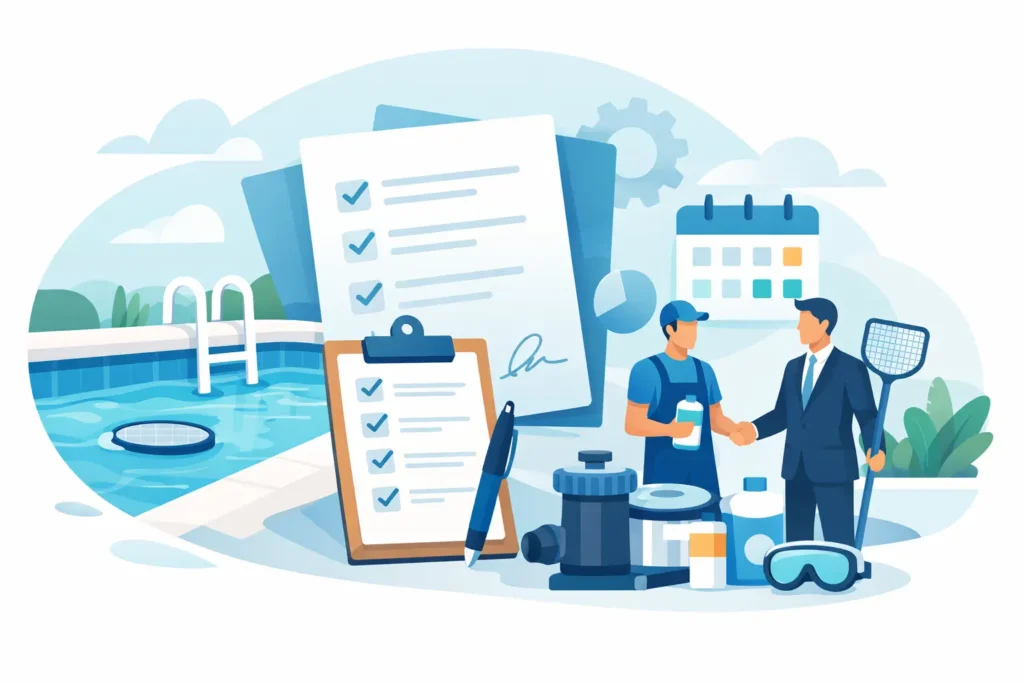
A pool that looks clear on the surface can still be drifting toward expensive problems. In warm climates and high-use properties, small maintenance gaps quickly turn into water imbalance, equipment strain, algae growth, surface wear, and unplanned shutdowns. That is why a pool annual maintenance contract is less about routine cleaning and more about protecting a valuable asset that people rely on every day.
For homeowners, landlords, hotels, residential communities, and facility managers, the real question is not whether the pool needs maintenance. It does. The question is whether that maintenance is being handled in a structured, accountable way that reduces risk and keeps the pool consistently safe, clean, and operational.
What a pool annual maintenance contract actually covers
A proper pool annual maintenance contract should cover far more than skimming leaves and adding chemicals. It is a recurring service agreement built to manage water quality, mechanical systems, hygiene standards, and visible pool condition over time.
In most cases, the scope includes scheduled pool cleaning, chemical testing and balancing, vacuuming, brushing walls and tiles, basket cleaning, filter inspection, pump checks, and basic troubleshooting of circulation components. Depending on the provider and the site, it may also include periodic deep cleaning, backwashing, equipment servicing, leak checks, lighting inspection, and reporting on repair needs.
This matters because pools operate as a system. If water chemistry is off, surfaces can stain or scale. If filtration is weak, water clarity drops and sanitizer performance suffers. If pumps or valves are neglected, the problem often shows up later as a breakdown rather than a warning. Good contract maintenance connects these moving parts before they become emergencies.
Why annual contracts make more sense than one-off service calls
One-off visits can solve visible issues, but they rarely create stability. A technician may correct chemical levels today, yet if no one returns on schedule, the same imbalance can build again within days. This is especially true in regions where heat, evaporation, dust, and frequent usage put constant pressure on water conditions.
An annual contract creates consistency. The pool is checked at planned intervals, service history is easier to track, and recurring patterns become visible. If a pump is losing performance, if chlorine demand is unusually high, or if tile scaling keeps returning, those issues can be identified early instead of being treated as isolated incidents.
There is also a cost advantage. Emergency repairs, water recovery after algae blooms, premature equipment replacement, and guest complaints usually cost more than predictable preventive service. For commercial properties, the operational value is even higher because a pool closure affects resident satisfaction, guest experience, and facility reputation.
What to look for in a pool annual maintenance contract
Not all contracts offer the same level of protection. Some are built around basic cleaning only, while others are structured as a full technical maintenance package. The right choice depends on the pool type, usage level, age of equipment, and whether the property has in-house support.
A strong contract starts with a clear service schedule. You should know how often technicians will visit, what tasks are performed each visit, and what is checked monthly, quarterly, or seasonally. Vague wording often leads to service gaps.
It should also define chemical management. Water treatment is one of the most critical parts of pool care, so the agreement should clarify whether testing, balancing, and chemical supply are included or billed separately. This is an area where assumptions can create disputes later.
Equipment coverage is another key point. Many clients assume pumps, filters, underwater lights, heaters, control panels, and circulation lines are automatically included in maintenance. In reality, some contracts only inspect them, while repairs and replacement parts are charged separately. Inspection-only coverage is not necessarily a problem, but it should be clearly stated.
Reporting and accountability are worth asking about as well. A dependable contractor should document service visits, report abnormal findings, and advise on corrective action before a minor issue turns into a system failure. For facility managers and commercial operators, this recordkeeping supports budgeting and operational planning.
The trade-offs between basic and comprehensive coverage
A lower-cost pool annual maintenance contract may be suitable for a small residential pool with modern equipment and light usage. If the system is in good condition and the owner only needs regular cleaning and chemistry control, a basic package can be enough.
But lower monthly pricing often means a narrower scope. Repairs, emergency callouts, replacement media, leak detection, tile descaling, and major equipment servicing may sit outside the agreement. That can make the initial price look attractive while shifting the real cost into unpredictable extras.
A more comprehensive contract usually costs more upfront but gives better operational control. This is often the better option for hotels, apartment buildings, schools, health clubs, and villas with older pool systems. In these cases, the cost of downtime, guest dissatisfaction, or repeated technical failures is higher than the difference in contract price.
So the best choice is not always the cheapest contract. It is the one that matches the actual risk profile of the pool.
Common problems a contract helps prevent
The benefit of contract maintenance is often easiest to see in the problems it prevents. Algae outbreaks are one example. They rarely happen overnight without warning. More often, they result from inconsistent sanitization, weak circulation, or delayed cleaning.
Scale buildup is another common issue, especially where water hardness and heat create difficult operating conditions. If water chemistry is not managed carefully, the result can be rough surfaces, stained finishes, clogged filters, and reduced equipment efficiency.
Then there is equipment failure. Pumps, motors, filters, valves, and dosing systems all work harder when the pool is poorly maintained. Debris buildup, pressure imbalance, air leaks, and neglected wear parts place stress on the system. Regular inspection does not eliminate all failures, but it greatly improves the chance of catching them before they become major repairs.
A contract also helps preserve the appearance of the pool. Fading tiles, stained walls, dirty grout lines, and cloudy water affect how people judge the entire property. In residential communities and hospitality settings, that visual standard matters.
Why technical capability matters
Pool maintenance is not just a housekeeping function. It is part water treatment, part mechanical upkeep, and part preventive asset management. That is why the contractor’s technical capability matters as much as the visit frequency.
A service provider should understand circulation systems, filtration performance, dosing requirements, waterproofing vulnerabilities, and the early signs of structural or finishing defects. If the pool area is part of a larger property, it also helps to work with a company that can coordinate related needs such as waterproofing, tiling, renovation, plumbing, and general technical maintenance under one service structure.
For many property owners and facility teams, that one-stop model reduces coordination issues. Instead of calling separate vendors for pool cleaning, equipment faults, surface repairs, and adjacent maintenance work, there is a single contractor responsible for a wider scope and faster follow-through.
Questions to ask before signing
Before approving a contract, ask how often the pool will be serviced and what each visit includes. Ask whether chemicals are included, whether emergency support is available, and how repair recommendations are documented.
You should also ask what is excluded. This is one of the most useful questions because it reveals the true shape of the agreement. Clarify parts replacement, major equipment repairs, leak rectification, media changes, and deep cleaning. If the provider cannot explain the boundaries clearly, the contract may cause more friction than value.
It is also reasonable to ask who will perform the work. Certified technicians, experienced pool staff, and proper supervision make a difference, especially in commercial and high-demand environments.
Choosing a contract that supports long-term performance
The best pool annual maintenance contract supports daily cleanliness, but its bigger role is long-term protection. It helps extend equipment life, maintain safe and balanced water, reduce avoidable repair costs, and keep the pool ready for use without constant oversight from the owner or facilities team.
That reliability is what most clients are really buying. Not just a service visit, but operational confidence. For property owners managing multiple systems across a building or site, working with an experienced technical partner such as Zillion Technical Services LLC can simplify maintenance planning and improve response across related service needs.
If you are comparing providers, focus on clarity, consistency, and technical depth. A contract should make pool ownership easier, not more uncertain. The right agreement gives you fewer surprises, better performance, and a pool that continues to reflect the standard of the property around it.

Pingback: How Pool Leaks Start and How to Repair Them - zillion