




A pool rarely fails all at once. More often, the warning signs show up in stages – cracked tiles, stained finishes, loose coping, leaking lines, outdated equipment, or water that never quite looks clean no matter how much attention it gets. That is usually when property owners start looking at swimming pool renovation services, not as a cosmetic upgrade, but as a practical step to protect the asset, improve usability, and reduce recurring maintenance issues.
For homes, hospitality properties, residential buildings, and commercial facilities, pool renovation is about more than appearance. In a climate with intense heat, heavy usage, and constant exposure to chemicals and sunlight, surfaces and systems wear down faster than many owners expect. Delaying corrective work often leads to larger costs, service interruptions, and avoidable damage to surrounding structures.
What swimming pool renovation services typically include
The scope of a renovation depends on the pool’s condition, age, and how it is used. Some projects are surface-focused, while others require structural and mechanical upgrades at the same time.
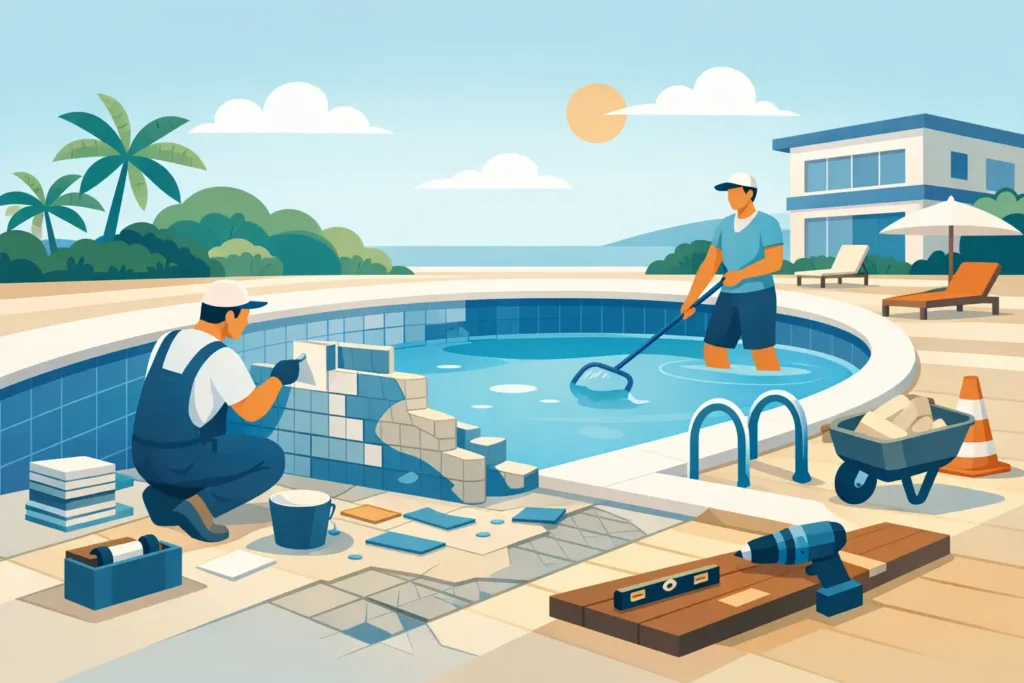
A basic renovation may involve retiling, regrouting, resurfacing, and replacing damaged coping stones. This kind of work improves appearance and addresses visible wear, but it should never be treated as a purely decorative fix if there are signs of underlying leakage or waterproofing failure.
A more complete renovation usually includes inspection and repair of the shell, waterproofing treatment, replacement of fittings, skimmer and drain work, pipe correction, and upgrades to filtration and circulation equipment. In many cases, lighting, ladders, handrails, and surrounding deck finishes are also part of the project. If the pool has aged equipment, poor hydraulic balance, or recurring water loss, renovation should address those root causes rather than just refresh the finish.
That is where experience matters. A contractor handling pool work in isolation may solve one issue while missing related problems in waterproofing, drainage, electrical, or surrounding finishes. An integrated technical team can assess the pool as part of the larger property system.
When renovation makes more sense than patchwork repairs
Many owners spend months or years paying for repeated minor repairs because each individual issue seems manageable. A crack gets filled. A few tiles are replaced. A pump is repaired again. Water quality is adjusted. Then the same problems return.
Renovation becomes the smarter decision when defects are connected. For example, a failing interior finish may be contributing to staining, rough surfaces, and water chemistry instability. Broken or hollow tiles may point to moisture intrusion behind the finish. Old circulation equipment may be increasing energy use while still delivering weak performance. If several of these issues are present together, patchwork repair usually costs more over time.
There is also an operational factor. For hospitality properties, residential communities, and managed buildings, a pool that looks worn or remains partially functional affects user experience and reflects poorly on property standards. In those environments, renovation is not only a maintenance decision. It is part of asset presentation and service quality.
The areas that deserve the closest inspection
Pool shell and waterproofing
If the shell has structural cracks or the waterproofing layer has failed, surface repairs alone will not hold up. Water movement through the structure can damage finishes, weaken adhesion, and create persistent leakage. A proper renovation should identify whether the issue is cosmetic, structural, or both.
Tiles, grout, and coping
These are often the first visible signs of deterioration. Loose tiles, discolored grout, and shifting coping stones create safety risks and allow water to penetrate areas that should remain sealed. Replacing them without correcting the substrate below can lead to early failure.
Filtration and circulation systems
A pool can look acceptable and still operate inefficiently. Old pumps, clogged lines, undersized filters, or failing valves can compromise water clarity and increase operating costs. Renovation is a good time to assess whether the equipment still matches the pool’s actual demand.
Lighting and fittings
Underwater lights, drains, return inlets, handrails, and ladders often show wear later in the pool’s life cycle. These components affect safety as much as appearance. If they are outdated or corroded, replacement during renovation is usually more efficient than scheduling separate shutdowns later.
Swimming pool renovation services are not one-size-fits-all
A private villa pool and a high-use commercial pool do not need the same solution. A residential owner may prioritize aesthetics, easier maintenance, and family safety. A facility manager may be more focused on downtime, compliance, durability, and lifecycle cost. The right renovation plan should reflect those differences.
Material selection is one example. Some finishes deliver a premium look but require more careful maintenance. Others are more practical for frequent use and heavy cleaning cycles. The same trade-off applies to tile choices, deck finishes, and equipment upgrades. The best option is not always the most expensive one. It is the one that fits the operating environment and long-term maintenance plan.
This is also why site assessment matters. Two pools with similar visible wear can require very different renovation scopes once drainage, waterproofing, plumbing, and equipment conditions are reviewed.
Why coordination matters during a pool renovation
Pool work often overlaps with multiple technical disciplines. Waterproofing, tiling, plumbing, electrical work, surface preparation, and finishing all need to be coordinated correctly. If those trades are handled separately, delays and responsibility gaps are common.
For property owners and managers, that usually means more supervision, more back-and-forth, and a higher risk of missed details. A one-stop technical contractor reduces that friction. Instead of trying to coordinate several vendors, the client works through a single service partner that can manage inspection, repair, finishing, and related maintenance needs as one controlled process.
That operating model is especially useful when the pool is part of a larger upgrade, such as deck refurbishment, waterproofing work, bathroom renovation, or broader property maintenance. In those cases, the pool should not be treated as an isolated package.
What a well-planned renovation should deliver
A good renovation should improve more than the pool’s appearance. It should restore confidence in daily operation. That includes stable water retention, safer surfaces, stronger waterproofing performance, cleaner finishing lines, and equipment that supports reliable circulation and sanitation.
It should also reduce repeat interventions. If the project is properly scoped, the owner should not be calling for the same tile repairs, leak checks, or finish corrections a few months later. That is one of the clearest signs that the work addressed causes, not just symptoms.
For clients managing multiple assets or tenant-facing properties, this reliability matters as much as the final look. Downtime affects resident satisfaction, guest experience, and maintenance budgets. A renovation that lasts is worth more than one that simply looks good on handover day.
Choosing the right contractor for swimming pool renovation services
The decision should not come down to price alone. Renovation quality depends on diagnosis, workmanship, material compatibility, scheduling discipline, and after-service support. If a contractor cannot explain the cause of the defects, the repair strategy, and the likely performance of the selected materials, that is a concern.
Look for a team that understands both pool systems and the surrounding technical environment. That includes waterproofing, finishing, mechanical components, and property maintenance realities. In practice, owners benefit from contractors who can manage the work with certified technicians, clear execution planning, and responsive support after completion.
For many clients, that is the real advantage of working with an established technical services company such as Zillion Technical Services LLC. The value is not only in renovating the pool. It is in having one dependable partner that can support the wider maintenance picture before, during, and after the project.
Timing the work properly
Owners often wait until a pool becomes visibly unattractive or difficult to operate. That is understandable, but it usually narrows the options. Once leakage worsens, surfaces fail extensively, or equipment reliability drops, the scope becomes more urgent and more disruptive.
The better approach is to plan renovation when signs first become consistent rather than isolated. If water loss is recurring, finishes are breaking down, or repairs are repeating, it is time for a serious technical review. Acting early gives more control over cost, scheduling, and material choices.
A pool should add value to a property, not create a steady stream of avoidable maintenance issues. The right renovation restores that balance and gives the owner something every property asset should deliver – reliable performance without constant attention.

Pingback: How Pool Leaks Start and How to Repair Them - zillion