






Dubai air conditioning systems work through long cooling seasons, frequent dust exposure, and buildings that are often sealed tightly for comfort. That makes the question, how often should AC ducts be cleaned, more than a housekeeping concern. The right schedule can support cleaner indoor air, steadier airflow, better comfort, and more reliable HVAC performance across homes, offices, retail units, and shared facilities.
For most properties, professional AC duct cleaning every one to three years is a practical starting point. In Dubai and the UAE, however, many properties benefit from inspection and cleaning closer to every one to two years because fine dust can enter buildings quickly and accumulate within supply and return ducts. Properties with heavy occupancy, active renovations, pets, smoking, water damage, or ongoing indoor air quality concerns may need service sooner.
How Often Should AC Ducts Be Cleaned?
There is no single schedule that applies to every building. A lightly used apartment with a well-maintained AC system may not require full duct cleaning annually. A busy office, restaurant, clinic, villa, or rental property may have very different demands.
A sensible baseline is to arrange a professional duct inspection every year as part of AC preventive maintenance. The technician can assess visible dust buildup, airflow condition, filter performance, drain cleanliness, insulation condition, and signs of moisture. Based on that inspection, full duct cleaning can be planned when it is genuinely needed rather than performed on a fixed date without evidence.
For many residential properties, cleaning every two years is suitable. For commercial facilities and high-occupancy spaces, annual inspection with cleaning every one to two years is often the more dependable approach. Facility managers should also consider their building use, tenant expectations, and any internal hygiene requirements when setting the maintenance schedule.
When annual duct cleaning may be appropriate
Annual cleaning can be justified where ducts collect contaminants faster than usual. This is common after fit-out work, major renovations, ceiling repairs, or construction activity near the property. Dust from drilling, sanding, gypsum work, tile cutting, and painting can travel through return-air openings and settle inside the duct network.
Properties close to construction zones, open sand areas, or high-traffic roads may also need more frequent attention. The same applies to homes with multiple pets, occupants with respiratory sensitivities, or spaces where doors open regularly throughout the day, such as retail stores and reception areas.
If the AC system has experienced water leakage, drain blockage, condensation issues, or suspected microbial growth, cleaning should not wait for the normal schedule. Moisture inside ductwork requires prompt inspection because cleaning alone may not solve the underlying cause. The source of the moisture, whether poor insulation, a leaking drain line, or inadequate airflow, must be corrected as part of the work.
Signs Your AC Ducts Need Cleaning Sooner
A duct system does not always show obvious warning signs from the outside. Still, several changes can indicate that an inspection is due.
If rooms feel dusty again soon after cleaning, especially around supply vents and return grilles, dust may be entering or circulating through the HVAC system. Weak airflow in one or more rooms can also point to buildup, though it may instead be caused by a dirty filter, blower issue, damper setting, blocked coil, or poorly balanced system. A professional assessment helps identify the actual issue before unnecessary work is approved.
Unpleasant or stale odors when the AC starts are another reason to investigate. Odors may come from duct dust, a dirty coil, standing water in the drain pan, contaminated filters, or growth around the fan coil unit. Cleaning ducts without servicing the AC unit itself may provide only a temporary improvement.
Watch for these additional warning signs:
- Visible dust or debris around vents, grilles, or accessible duct openings
- Persistent allergy-like symptoms that improve when occupants leave the building
- Recent renovation, water intrusion, pest activity, or long periods of property vacancy
- Uneven cooling, unusual noise, or a noticeable drop in air volume from vents
These signs do not automatically mean the entire duct system needs cleaning. They do mean the system should be inspected by trained technicians who can determine the condition of the ducts, fan coil units, filters, and drainage components.
Why Duct Cleaning Matters in UAE Properties
AC ducts are part of a larger cooling system, not an isolated component. When dust and debris build up, the system may circulate more particles indoors and may need to work harder to deliver conditioned air. That can affect occupant comfort and place added strain on equipment over time.
Professional cleaning can help reduce loose dust within the air path, improve the cleanliness of vents and grilles, and support consistent airflow when buildup is contributing to restrictions. For landlords and facility managers, it can also be a useful part of turnover preparation, annual maintenance planning, and tenant satisfaction efforts.
The trade-off is that duct cleaning is not a substitute for regular AC servicing. Filters still need timely replacement or cleaning. Fan coil units, evaporator coils, blower assemblies, thermostats, drain lines, and insulation all require separate attention. A property can have clean ducts yet still suffer from poor cooling because of a clogged filter or coil, refrigerant issue, drain problem, or undersized equipment.
The most effective approach is to include duct inspection within a complete AC maintenance program. This gives property owners one clear record of system condition and helps prevent small performance issues from becoming disruptive repairs.
What Professional AC Duct Cleaning Should Include
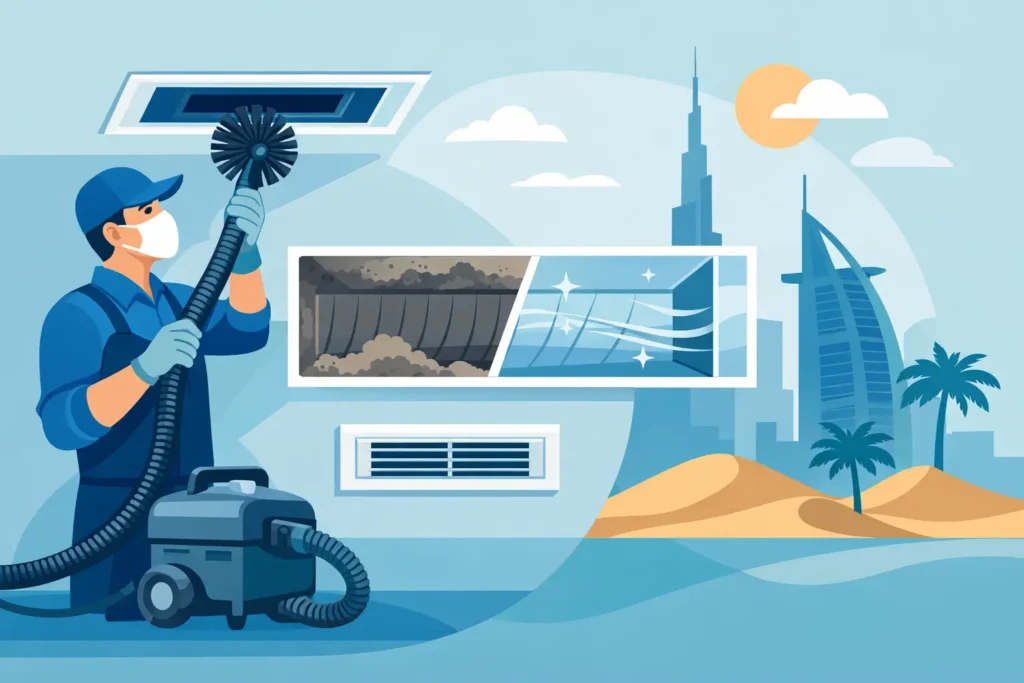
Proper duct cleaning is more than spraying fragrance through vents or vacuuming only the visible grille. The work should begin with an inspection of accessible duct sections, supply and return points, fan coil units, filters, and areas where dirt or moisture is most likely to collect.
Technicians should protect floors, furniture, and finished surfaces before opening access points. They should use suitable negative-pressure vacuum equipment and agitation tools to remove accumulated dust from accessible ductwork without pushing debris further into the system. Supply vents, return grilles, and accessible components should be cleaned carefully and refitted correctly.
Where disinfecting treatment is proposed, ask why it is needed and what condition it addresses. Chemical treatment should not be used as a replacement for mechanical cleaning or moisture repair. If there is evidence of mold-like growth, water damage, or odor, the contractor should identify the likely source and explain the corrective work required.
After service, a professional team should leave the system operating correctly, confirm that vents are secure, and advise on follow-up maintenance. Before-and-after documentation can be particularly useful for property managers, commercial operators, and landlords maintaining service records across multiple units.
Keep Ducts Cleaner Between Appointments
The condition of ductwork depends heavily on daily AC maintenance. Use filters that match the equipment requirements and replace or clean them on the recommended schedule. In dusty conditions, filters may need attention more frequently than expected. A neglected filter can reduce airflow and allow more dust to enter the system.
Keep return grilles clear of furniture, curtains, and storage. Arrange regular cleaning of fan coil units and drain lines, especially before peak cooling periods. If renovation work is taking place, protect return openings where practical and schedule an AC inspection once the work is complete.
For multi-unit buildings and commercial properties, an annual maintenance contract can make this process easier to manage. Planned inspections provide a clearer view of each system’s condition and allow duct cleaning, coil servicing, drainage repairs, and other technical work to be scheduled before comfort complaints or equipment downtime increase.
Zillion Technical Services LLC supports property owners and facility teams with practical AC maintenance, duct cleaning, and wider technical upkeep services designed around real building conditions. The goal is not to clean ducts more often than necessary, but to keep the complete AC system clean, efficient, and dependable.
When you are unsure whether ducts need cleaning, start with a professional inspection rather than guessing. A clear assessment of dust, airflow, moisture, filters, and AC components will give you the right maintenance plan for your property and help protect comfort through every cooling season.

Pingback: Why AC Smells: Causes and Practical Fixes - zillion