







A bad odor from an air conditioner is more than an inconvenience when your property depends on cooling every day. If you are asking why AC smells, the answer is usually found in moisture, microbial growth, accumulated debris, a drainage problem, or a mechanical fault. The type of smell matters. It can help distinguish a maintenance issue from a condition that requires immediate professional attention.
For homeowners, landlords, and facility managers, prompt diagnosis protects indoor comfort, equipment efficiency, and occupant confidence. Ignoring an odor can allow a small issue inside the AC unit or ductwork to become a larger repair, especially where systems run for long hours in hot or humid conditions.
Why AC Smells and What the Odor Can Mean
An air conditioning system moves air through filters, coils, drain components, and ducts. Any dirt, standing water, organic buildup, or damaged electrical part within that path can affect the air delivered to rooms. The odor may appear only when cooling starts, remain constant while the fan runs, or become stronger after the unit has been off for several hours.
Musty or Damp Smell
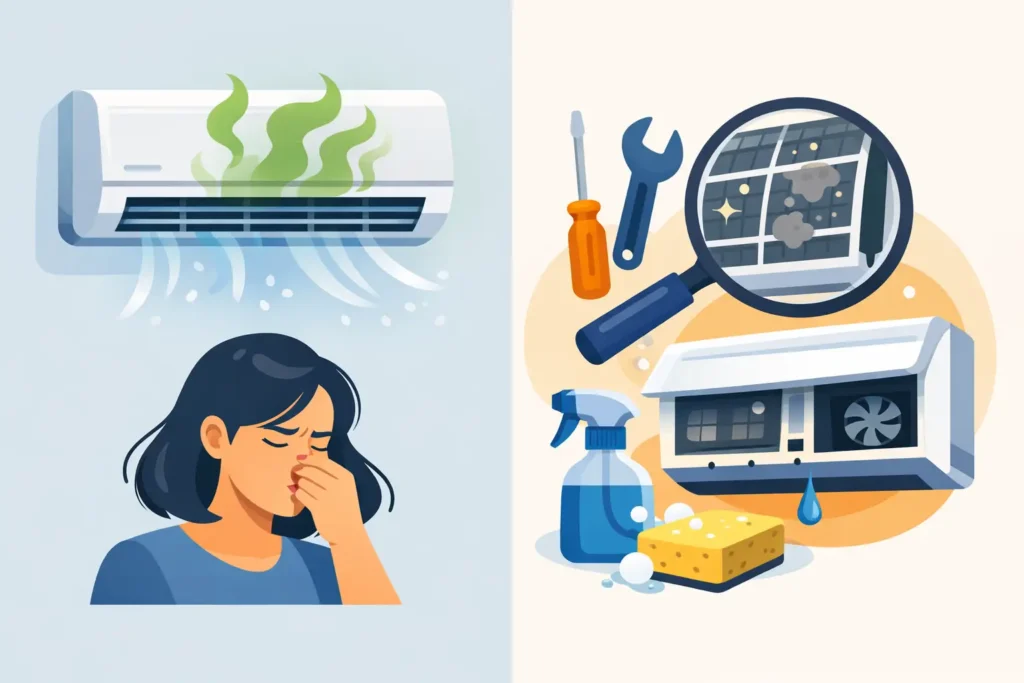
A musty smell is one of the most common AC complaints. It usually indicates excess moisture around the evaporator coil, drain pan, condensate line, or ductwork. Dust and humidity create conditions where mold or mildew can grow, particularly if the coil does not dry properly between cooling cycles.
A clogged condensate drain line is a frequent cause. Instead of flowing away, condensed water backs up in the pan or line. This standing water can produce a stale odor and, if left unresolved, may cause water leakage around the indoor unit.
Dirty filters can make the situation worse. Filters collect dust, lint, and airborne particles. Once saturated, they restrict airflow and may hold moisture and odors that recirculate through the property. Replacing or cleaning filters on schedule is a simple but effective first step.
Sour, Sweaty, or “Dirty Sock” Smell
The so-called dirty sock smell is usually linked to bacteria and microbial buildup on the evaporator coil. When the AC turns on, air passes over the damp coil and carries the odor into occupied spaces. It may be especially noticeable at startup or when switching between cooling and fan modes.
Surface cleaning alone may not solve this problem if buildup is present deeper in the coil fins, drain tray, or blower section. A proper AC service should inspect these components, clean them with suitable materials, and confirm that drainage and airflow are working correctly. Repeated use of room sprays only masks the cause.
Burning, Smoky, or Electrical Smell
A burning smell should never be treated as a normal sign of AC operation. In some cases, it can be brief dust burn-off when a system has not operated for a long period. However, a persistent burning, melting plastic, or electrical odor can point to overheated wiring, a failing motor, a damaged capacitor, or an issue in the control board.
Turn the system off if the smell is strong, continues after a few minutes, or is accompanied by unusual noise, reduced airflow, tripping breakers, or visible smoke. Do not restart it repeatedly to test whether the odor goes away. Electrical faults require inspection by a qualified technician before the unit is returned to service.
Rotten Egg, Sulfur, or Sewage Smell
A rotten egg or sewage-like odor may not originate inside the AC equipment, but the system can distribute it quickly. Possible sources include a dry plumbing trap, a drainage connection problem, a dead animal or pest activity in ductwork, or contaminated water in the condensate system.
If a property uses natural gas, a sulfur-like smell should be treated with extra caution because gas suppliers often add an odorant for leak detection. Leave the affected area if the odor is strong, avoid switches and open flames, and contact the appropriate emergency service or qualified professional. Do not assume the AC unit is the only source.
Chemical, Sweet, or Solvent-Like Smell
A chemical smell can have several causes. It may be related to cleaning products, building materials, pest-control treatments, or stored chemicals near an air intake. In some cases, it may indicate a refrigerant leak or overheating electrical insulation.
Refrigerant itself may be difficult to identify by smell, and not every chemical odor means refrigerant is leaking. Still, if cooling performance drops, ice forms on refrigerant lines, hissing is heard, or the odor appears alongside headaches or eye irritation, arrange an AC inspection promptly. Refrigerant work must be handled by trained technicians using the correct equipment and procedures.
Common Causes Inside the AC System
The exact cause depends on the equipment type, maintenance history, operating hours, and indoor conditions. Split systems, packaged units, and central ducted systems can all develop odors, although the location of the issue may differ.
The most common sources are dirty filters, contaminated evaporator coils, blocked condensate drains, neglected drain pans, dirty blower wheels, and damp insulation around ducts. In ducted systems, dust buildup or moisture intrusion in return-air ducts can make the odor feel widespread. If only one room smells, the issue may be more localized, such as a nearby drain, vent, or indoor unit.
Poor airflow also contributes. A blocked filter, closed supply vents, undersized return air, or a failing blower can leave coils wetter for longer. That increases the chance of microbial growth. Short cooling cycles can create a similar pattern because the unit does not run long enough to manage humidity effectively.
What You Can Check Before Calling for Service
Start with safe, visible checks. Turn the AC off before opening any access panels. Look for water around the indoor unit, stains on ceilings or walls, a full drain pan, or visible dirt on the filter. If the filter is washable and designed for reuse, clean and dry it fully before reinstalling it. Otherwise, replace it with the correct size and rating.
Check whether the odor occurs in every room or only near one vent. Note when it starts and whether it changes between cooling and fan-only operation. These details help a technician identify whether the source is the indoor unit, drainage system, ducts, or another building service.
Avoid pouring harsh chemicals into drain lines, spraying perfume into vents, or attempting to clean electrical components yourself. These actions can damage equipment, create new indoor air concerns, or hide a problem that needs proper repair.
When an AC Smell Needs Immediate Attention
Some odors should be treated as urgent. Shut down the system and request professional support if you notice burning insulation, smoke, repeated breaker trips, a strong chemical smell, or a suspected gas odor. The same applies if water is leaking heavily from the unit or if occupants experience irritation, dizziness, or breathing discomfort that improves after leaving the cooled space.
Musty odors are not always emergencies, but they should not be allowed to continue for weeks. Persistent moisture can affect ceilings, wall finishes, duct insulation, and indoor air quality. For rental properties and commercial spaces, delayed action can also lead to tenant complaints and avoidable downtime.
Preventing AC Odors Before They Return
Reliable prevention comes from scheduled maintenance rather than occasional odor treatment. Filters need attention based on system use and local dust conditions. High-use properties may require more frequent checks than a lightly occupied home. Coils, drain pans, and condensate lines should be cleaned as part of routine servicing, while technicians should verify proper drainage, airflow, electrical connections, and thermostat operation.
Duct inspection is valuable when odors persist after the indoor unit has been cleaned or when dust returns quickly after filter replacement. It is not necessary to clean ducts on a fixed schedule in every property, but it is sensible after water damage, pest activity, renovation dust, visible contamination, or repeated odor complaints.
For multi-unit buildings, offices, retail spaces, and villas with several AC zones, an annual maintenance contract helps create consistency. Planned inspections reduce emergency callouts, keep drainage components clear, and make it easier to spot small defects before comfort is affected.
A clean-running AC system should not have a noticeable odor. If it does, treat the smell as useful diagnostic information, not something to cover up. Zillion Technical Services can assess the system, identify the source, and carry out the right corrective work so your cooling remains clean, dependable, and ready for daily use.
