





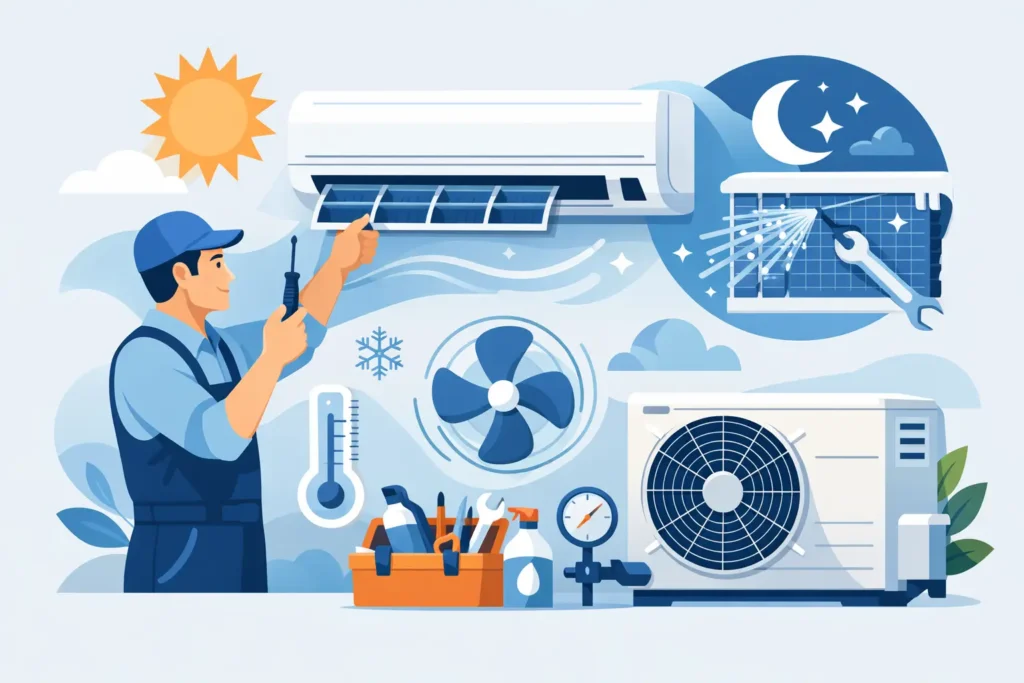
A cooling system rarely fails without warning. Higher electricity bills, uneven room temperatures, weak airflow, unusual sounds, and excess humidity usually appear first. The best AC maintenance tips focus on catching these small performance changes before they become an uncomfortable breakdown, costly repair, or disruption to tenants, staff, customers, or family members.
For property owners and facility managers, AC maintenance is not only about keeping rooms cool. It protects equipment life, indoor air quality, operating budgets, and day-to-day continuity. In hot climates, where systems often run for long hours, a disciplined maintenance plan is one of the most practical investments a property can make.
1. Replace or Clean Air Filters on Schedule
A dirty air filter is one of the most common causes of reduced AC performance. It restricts airflow, makes the blower work harder, allows dust to circulate indoors, and can contribute to frozen evaporator coils. The system may still cool, but it will consume more energy to do the same job.
Most residential filters should be checked monthly and replaced every one to three months, depending on occupancy, pets, nearby construction dust, and system use. Commercial properties may need more frequent attention, especially in busy offices, retail units, kitchens, workshops, or buildings near high-traffic areas. Washable filters must be fully dry before reinstallation to avoid moisture and microbial growth.
2. Keep Supply and Return Vents Clear
Furniture, storage boxes, curtains, and decorative panels can block vents without anyone noticing. A blocked supply vent reduces conditioned air entering the room, while a blocked return vent limits the air moving back to the unit for cooling. Both conditions create poor circulation and uneven temperatures.
Walk through the property regularly and make sure vents are open, clean, and unobstructed. Do not close multiple vents in unused rooms to force more cooling elsewhere. Most central systems are designed for a balanced airflow volume, and closing too many registers can increase pressure in the ductwork and strain the equipment.
3. Clean the Outdoor Condenser Area
The outdoor condenser releases heat removed from the building. When its coil is covered with dust, leaves, sand, lint, or debris, heat cannot escape efficiently. That forces the compressor to run longer and raises the risk of overheating.
Keep the area around the outdoor unit clear, with adequate open space for airflow. Trim vegetation, remove loose debris, and check that nothing is leaning against the unit. Surface cleaning can help, but coil fins bend easily and electrical components require care. A technician should handle deep coil cleaning, fin straightening, and any work that involves opening the equipment.
4. Check the Thermostat Before Blaming the AC
An incorrect thermostat setting can look like a cooling failure. Confirm that it is set to cooling mode, the target temperature is realistic, and the fan setting is correct. If the fan is set to “on,” it will run continuously, even when the compressor is not cooling. “Auto” is usually the better setting for normal operation.
If a thermostat is near direct sunlight, a kitchen appliance, an exterior door, or a heat-producing machine, it may read the room temperature inaccurately. Smart or programmable thermostats can reduce unnecessary run time, but they need sensible schedules. Aggressively changing temperatures throughout the day can make some systems work harder rather than save energy.
5. Protect the Condensate Drain Line
Air conditioning removes humidity as it cools the air. That moisture flows through a condensate drain line. If the line becomes clogged with dust, algae, or sludge, water can back up into ceilings, walls, equipment cabinets, or floor areas.
Check for dripping, water stains, musty odors, or an AC unit that stops unexpectedly. Many systems have a safety switch that shuts down cooling when a drain pan fills. Clearing a drain line early is simple compared with repairing water-damaged finishes, ceilings, insulation, or electrical components.
6. Watch for Changes in Airflow and Temperature
Do not wait until the AC stops completely. A room that takes longer to cool, one vent with noticeably weaker air, or a large temperature difference between zones can point to a dirty coil, blower issue, duct leakage, refrigerant concern, or failing component.
For facilities with several units, keep a simple record of thermostat settings, complaints, service visits, and recurring issues by location. This helps identify patterns. For example, repeated complaints in one area may be caused by sun exposure, poor insulation, damaged ductwork, or an undersized system rather than a problem with the indoor unit alone.
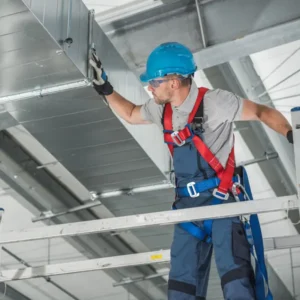
7. Keep Ductwork Clean, Sealed, and Insulated
Ductwork has a direct effect on comfort and energy use. Leaks allow cooled air to escape into ceiling voids, plant rooms, or unconditioned spaces. Poor insulation can cause heat gain and condensation, while damaged flexible ducts can restrict airflow.
Visible duct issues, persistent dust, inconsistent cooling, and unusually high utility costs justify a professional inspection. Duct cleaning is useful when there is confirmed dust buildup, construction debris, contamination, or visible mold concerns. It is not a substitute for changing filters or fixing the source of moisture and dust entering the system.
8. Schedule Professional Preventive Service Twice a Year
Some maintenance tasks are suitable for occupants or on-site teams. Technical work should be performed by qualified AC technicians. A proper preventive visit typically includes inspecting electrical connections, cleaning coils, checking motors and capacitors, testing safety controls, measuring airflow, examining the drain system, and assessing refrigerant performance.
Twice-yearly service is a practical baseline for many properties: once before the heavy cooling season and once afterward. Systems in demanding locations, such as restaurants, server rooms, retail spaces, villas with high occupancy, or facilities operating around the clock, may require more frequent inspections. The right interval depends on operating hours, equipment age, load, and environmental conditions.
9. Address Refrigerant Concerns Professionally
Refrigerant is not a fuel that should need regular topping up. If the charge is low, there is usually a leak or another system issue that needs investigation. Adding refrigerant without finding the cause may restore cooling briefly, but it does not protect the compressor or solve the underlying problem.
Warning signs include ice on refrigerant lines, warm air from vents, hissing noises, extended run times, and poor cooling despite a clean filter. Refrigerant work requires trained handling, appropriate tools, and accurate testing. It should never be treated as a basic DIY task.
10. Reduce the Cooling Load Inside the Building
Maintenance works best when the building itself is not fighting the AC. Heat entering through unshaded windows, gaps around doors, damaged weatherstripping, poor insulation, and frequent door opening all increase the load on the system.
Use blinds, curtains, shading, and properly sealed doors where appropriate. In commercial spaces, air curtains can help reduce the loss of cooled air at busy entrances. For older properties, combining AC servicing with practical improvements to insulation, sealing, and interior finishes can produce a more noticeable comfort improvement than servicing the unit alone.
11. Do Not Ignore Noises, Odors, or Short Cycling
A healthy AC system should operate with a consistent, low operating sound. Grinding, rattling, buzzing, repeated clicking, or loud vibration should be checked promptly. These noises may come from loose components, fan motors, electrical parts, damaged mounts, or debris around the unit.
Musty odors can indicate moisture in the drain system, dirty coils, or microbial buildup. A burning smell or repeated breaker trip requires urgent attention. Short cycling, where the system turns on and off frequently, can also damage components over time. Causes range from thermostat issues to airflow restrictions and incorrect system sizing.
12. Use an AMC for Consistent Property Protection
Reactive repairs are often more expensive because they happen when cooling is already compromised. An annual maintenance contract creates a planned service schedule, documented inspections, and a clear response path when faults occur. It is particularly useful for landlords, property managers, offices, retail operations, and multi-unit residential properties that cannot afford repeated disruption.
A good AMC should clearly define the number of visits, included checks, emergency response expectations, exclusions, and reporting. It should also cover the full system context where needed: AC units, ducts, drainage, electrical controls, and related building maintenance issues. Zillion Technical Services LLC supports this one-stop approach for properties that need dependable AC care alongside wider technical maintenance.
Reliable cooling comes from consistent attention, not last-minute repairs. If a unit is showing early warning signs, schedule an inspection while the issue is still small. A timely service visit can protect comfort today and prevent a larger interruption when the property needs cooling most.

Pingback: Commercial Property Upkeep Guide for Reliable Operations - zillion