


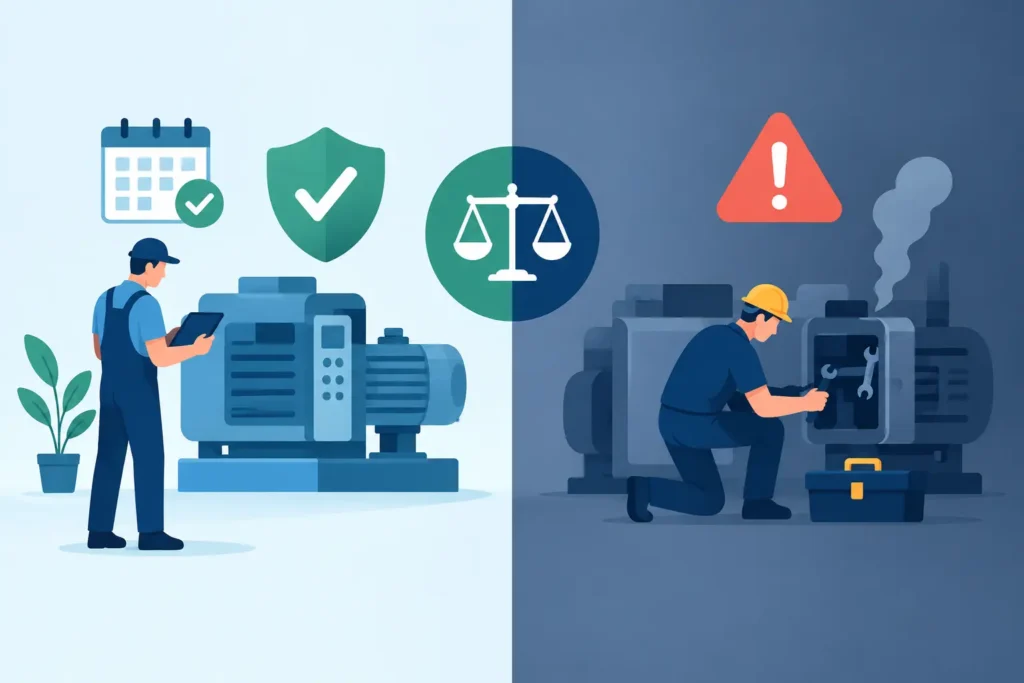
A failed air-conditioning unit during peak summer heat is rarely just an AC problem. It can disrupt tenants, affect staff comfort, strain operations, and create an urgent callout that costs more than planned work. That is the practical difference between preventive versus reactive maintenance: one approach controls risk before failure, while the other responds after the damage, disruption, or breakdown has already occurred.
For property owners, facility managers, landlords, and commercial operators, the right balance is not simply a maintenance preference. It directly affects operating costs, equipment life, tenant satisfaction, safety, and the condition of the property over time.
What Is Preventive Maintenance?
Preventive maintenance is scheduled work performed to keep building systems and assets operating reliably. It is planned around service intervals, inspections, manufacturer recommendations, operating conditions, and the history of the asset.
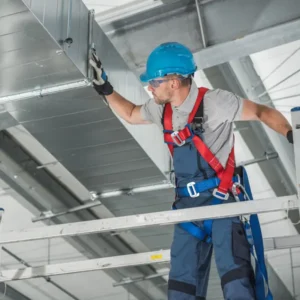
For a property in Dubai or elsewhere in the UAE, this may include cleaning AC filters and coils, checking ductwork, inspecting electrical connections, testing water pumps, examining waterproofing, servicing pool equipment, and identifying early signs of leaks or corrosion. The work is carried out before a visible failure forces an emergency repair.
The objective is not to replace working equipment unnecessarily. It is to identify wear, contamination, loose components, declining performance, and minor defects while they can still be corrected efficiently. A trained technician can often resolve a small issue during a routine visit rather than after it becomes an expensive outage.
How preventive maintenance works in practice
A useful preventive program starts with an asset list and a service schedule. Critical equipment receives closer attention because its failure has a greater operational impact. An AC system serving occupied offices, a pool circulation system, or a water pump for a residential building cannot be treated the same way as a low-use fixture.
Each visit should include defined checks, documented findings, and clear recommendations. This creates a maintenance record that helps property teams spot recurring issues, budget for replacements, and make informed decisions instead of reacting under pressure. Annual maintenance contracts are often effective because they establish routine visits, accountability, and faster support when a problem is identified.
What Is Reactive Maintenance?
Reactive maintenance is repair work performed after an asset fails or a fault becomes impossible to ignore. A leaking pipe that damages a ceiling, an AC unit that stops cooling, cracked pool tiles, a failed exhaust fan, or peeling paint caused by moisture are all common examples.
Reactive work is necessary. No building can eliminate every unexpected failure, particularly where equipment is aging, heavily used, or exposed to demanding weather conditions. The issue is relying on reactive work as the main maintenance strategy.
When repairs are only requested after failure, the property team has less control over timing, cost, parts availability, and access. Emergency work may require immediate labor, temporary solutions, tenant coordination, and restoration of finishes after the original fault is fixed. What began as a small seal failure can become a waterproofing, painting, ceiling, and electrical repair project.
When reactive maintenance is the right choice
Reactive maintenance can be reasonable for low-cost, noncritical items with limited consequences if they fail. Replacing a minor fitting, repairing a small cosmetic defect, or responding to an isolated issue in a low-traffic area may not justify frequent scheduled inspections.
It can also be appropriate when an asset is near the end of its useful life and replacement is already planned. In that case, spending heavily on preventive repairs may not offer good value. The decision should be based on risk, replacement cost, safety, and the impact of downtime, not on a fixed rule applied to every item.
Preventive Versus Reactive Maintenance: The Real Cost Difference
The immediate cost of reactive maintenance can look lower because no money is spent until something breaks. That comparison is misleading. The true cost includes emergency labor, replacement parts, business interruption, tenant complaints, energy waste, water damage, and the potential need to repair connected finishes or systems.
Preventive maintenance creates a predictable expense, which helps owners and managers plan budgets. It also reduces avoidable failures by addressing the causes that often lead to breakdowns: blocked filters, poor drainage, loose electrical connections, worn seals, neglected pumps, surface deterioration, and hidden moisture penetration.
For example, regular AC servicing can support efficient cooling and help identify reduced airflow before occupants report discomfort. Pool maintenance can prevent water-quality problems and protect pumps, filters, and finishes. Routine waterproofing inspections can reveal failed joints or damaged areas before moisture reaches interior walls, ceilings, or electrical components.
Preventive work does not guarantee that equipment will never fail. It improves the odds that problems are found early and handled under controlled conditions. That distinction matters most for properties where downtime is costly or inconvenient.
Key Benefits of a Planned Maintenance Program
A planned program gives property teams more than a checklist. It provides visibility into asset condition and helps prioritize work based on operational importance.
First, it supports longer equipment life. Systems that are cleaned, adjusted, lubricated where required, and inspected for developing faults are less likely to operate under unnecessary strain. This is especially relevant for HVAC equipment operating for long periods in hot climates.
Second, it improves budget control. Instead of approving urgent repairs without time to compare options, managers can schedule repairs and replacements around operational needs. Known issues can be addressed during quieter periods, planned shutdowns, or renovation work.
Third, it protects the user experience. Comfortable indoor temperatures, clean common areas, functioning sanitary fixtures, safe pool facilities, and well-maintained finishes contribute to tenant confidence and customer satisfaction. Building maintenance is often noticed only when it is missing.
Finally, it simplifies vendor coordination. A one-stop technical maintenance partner can manage related work across HVAC, electrical support, plumbing, waterproofing, painting, pool care, and renovations. This reduces the time spent coordinating multiple contractors and helps ensure that one repair does not create an unresolved issue in another trade.
Building a Maintenance Strategy That Fits Your Property
The best approach is usually a combination of preventive planning and responsive repair capability. Critical assets need scheduled maintenance, while a dependable team must remain available for genuine emergencies.
Start by identifying systems that affect safety, comfort, revenue, water damage risk, or business continuity. AC units, pumps, electrical components, drainage systems, waterproofed areas, pools, and high-use sanitary fixtures typically belong near the top of the list. Then review the age, condition, usage pattern, and repair history of each asset.
A newer system may need basic scheduled servicing, while an older unit with repeated faults may need closer monitoring or a replacement plan. Repeated reactive repairs are a signal. They may indicate poor installation, an underlying system issue, or equipment that is no longer economical to maintain.
Service reports should be practical and clear. They should state what was inspected, what was found, what was repaired, and what requires future attention. This level of documentation helps owners avoid vague recommendations and gives facility teams a defensible basis for maintenance decisions.
Choosing the Right Maintenance Partner
The quality of maintenance depends on the people performing it. A service provider should have qualified technicians, defined inspection procedures, responsive support, and the ability to handle both recurring maintenance and corrective works when needed.
For properties with several technical requirements, it is also valuable to choose a contractor with broad coverage. Zillion Technical Services LLC supports property upkeep through coordinated maintenance, MEP-related services, renovations, waterproofing, pool care, HVAC work, and general repairs. Working with one accountable provider can reduce delays between diagnosis, approval, repair, and finishing work.
Before setting up an AMC or maintenance schedule, ask for a clear scope of work. Confirm visit frequency, covered assets, reporting procedures, emergency response expectations, exclusions, and how additional repairs will be quoted. A good agreement should make responsibilities clear rather than creating uncertainty when a fault occurs.
A Better Way to Protect Property Performance
Reactive repairs will always have a place because unexpected failures happen. But when they become the default approach, costs become less predictable and property performance becomes harder to manage. Preventive maintenance gives owners and managers the time to make better decisions before minor defects turn into urgent problems.
The most practical next step is to review the assets that cause the greatest disruption when they fail. Put those systems on a documented service schedule, track the findings, and use each maintenance visit to protect the comfort, value, and reliability of the property.
