






A duct cleaning service review should begin before a contractor arrives with equipment. In Dubai properties, AC systems often operate for long hours through demanding weather, and the condition of ductwork directly affects indoor comfort, air circulation, housekeeping demands, and HVAC performance. The right provider does more than remove visible dust. They inspect the system, define the work clearly, protect the property, and document what was completed.
For homeowners, landlords, facility managers, and commercial operators, the goal is not simply to find the lowest quote. It is to appoint a technical team that can carry out cleaning safely, minimize disruption, and recognize related AC issues before they create downtime or costly repairs.
What a Duct Cleaning Service Review Should Measure
A useful review looks beyond star ratings or a single positive comment. Duct cleaning is a technical service, so the quality of the process matters as much as the final appearance. A contractor may promise fast cleaning, but a rushed job can leave sections untreated, spread loosened dust into occupied areas, or overlook coils, drain components, and access limitations that affect system efficiency.
Start by reviewing whether the company explains its scope in practical terms. The proposal should identify which areas will be cleaned, such as supply ducts, return ducts, diffusers, grilles, main trunk lines, and accessible branches. If the service includes AC indoor units, filters, coils, drain trays, or blower components, these should be stated separately rather than assumed.
This level of clarity protects both parties. It gives the property owner a realistic basis for comparing quotations, while the contractor can allocate appropriate labor, equipment, and working time. A vague promise to “clean the ducts” does not establish how many units, outlets, or duct runs are included.
Scope Must Match the Property
A studio apartment, villa, office floor, restaurant, warehouse, and retail unit each present different duct cleaning requirements. Large properties may have multiple air handling units, concealed fan coil units, long duct runs, or restricted ceiling access. Commercial sites may also require work outside business hours to avoid interrupting employees, customers, or tenants.
Ask the contractor how the scope was assessed. A site inspection is often the right starting point for larger, older, or technically complex systems. For a straightforward residential job, clear photos, unit details, and the number of vents may be enough to prepare an initial estimate. It depends on the system layout, access conditions, and level of contamination.
A dependable provider will also explain what cannot be accessed without additional ceiling work or modifications. Honest limitations are better than an unrealistic guarantee.
Equipment and Methods That Indicate Professional Work
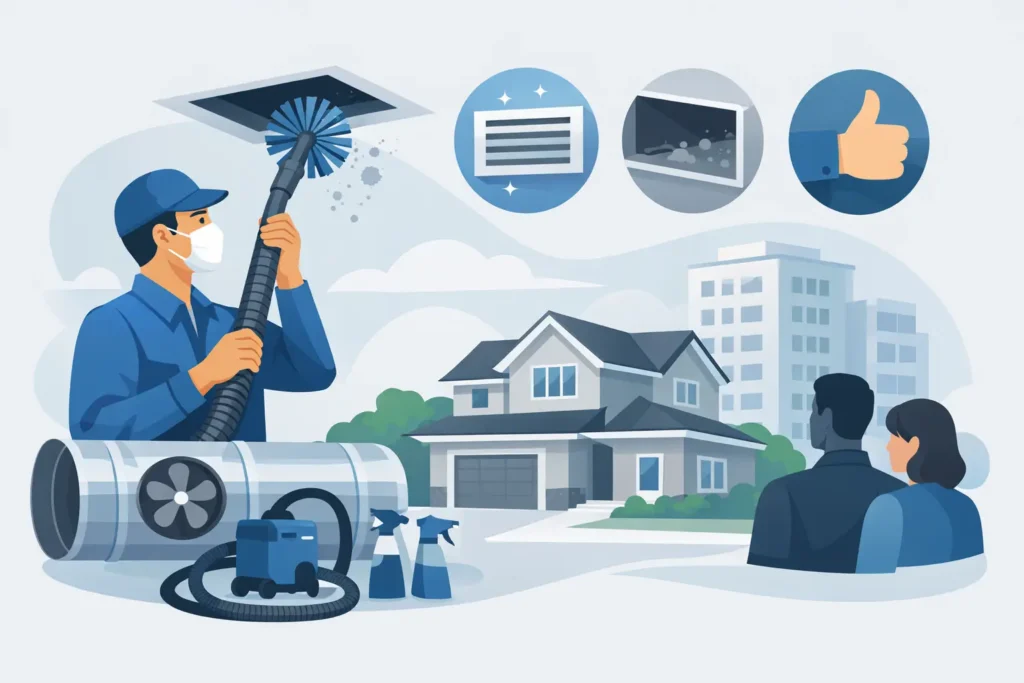
The quality of duct cleaning depends heavily on containment and agitation. A professional team uses suitable vacuum collection equipment and tools that loosen settled debris from duct surfaces. Cleaning should be controlled so dust is captured rather than pushed deeper into the system or released into rooms.
Before work starts, technicians should protect flooring, furniture, and nearby finishes. Diffusers and grilles should be removed carefully, cleaned, and refitted securely. Access panels may be required in some systems, but these should be planned and sealed correctly after the work is complete.
For AC units, cleaning filters alone is not the same as cleaning the duct network. Filters are an important first barrier, but they do not resolve dust accumulation inside ducts or address buildup on coils and drain trays. At the same time, not every property needs an extensive cleaning program every year. Buildings with heavy occupancy, renovation dust, pets, smoking exposure, poor filtration, or persistent odor concerns may need more frequent attention than a well-maintained, lightly used home.
Be cautious of providers that use alarming claims to push immediate work. Dust is common in active HVAC systems, particularly in dry, sandy environments. The contractor should identify observable conditions and recommend a proportionate solution, not rely on fear-based selling.
Technician Standards and Site Conduct
Duct cleaning takes place inside occupied homes and operating facilities. Professional conduct matters. Look for a company that sends trained technicians, provides clear arrival timing, and assigns supervision for larger or more complex projects. Teams should understand AC components well enough to avoid damaging flexible ducts, insulation, dampers, electrical connections, or ceiling finishes.
A strong service experience includes communication before, during, and after the work. The team should confirm access requirements, advise occupants about noise or temporary AC shutdowns, and identify any conditions that need client approval. For example, a damaged flexible duct, blocked drain line, heavily soiled coil, or loose diffuser may require repair work beyond the original cleaning scope.
This is where an all-in-one technical maintenance provider can reduce coordination challenges. Rather than calling separate vendors for duct cleaning, AC servicing, ceiling repairs, and related maintenance, property owners can have the issues assessed through one responsible point of contact. Zillion Technical Services LLC supports this practical approach with AC, duct, maintenance, and renovation capabilities for residential and commercial properties.
Pricing: Compare Value, Not Just a Starting Rate
Low advertised prices can be useful as an initial reference, but they rarely tell the full story. A duct cleaning quotation should be reviewed against the number of AC units, vents, duct sections, access requirements, cleaning method, manpower, and whether consumables or minor repairs are included.
A transparent estimate typically clarifies the service duration and what will be charged additionally. Additional costs may be reasonable when a site reveals hidden access problems or separate repair needs, but they should be explained before the extra work proceeds. Property managers should also confirm whether the quoted rate includes night work, building access coordination, waste handling, and any required safety procedures.
Avoid choosing a contractor only because they claim to finish the fastest. A small system may be completed efficiently, while a larger villa or commercial space requires time for preparation, cleaning, inspection, and proper reinstatement. Good execution is efficient without being careless.
Proof of Work and Quality Control
A reliable duct cleaning service should leave the client with more than a verbal assurance. Before-and-after photographs can be helpful, especially for accessible ducts, grilles, filters, coils, and drain trays. They are not a substitute for a properly defined scope, but they provide useful evidence that cleaning was performed.
For commercial properties, request a service report that records the serviced areas, observed conditions, recommendations, and any defects requiring follow-up. This is valuable for maintenance records, tenant communication, and planning future preventive work. If the building is under an annual maintenance contract, duct cleaning can be scheduled alongside AC inspections and filter replacement to reduce avoidable callouts.
Quality control also includes testing the system after work. Technicians should confirm that diffusers are secure, AC units restart correctly, airflow is not obstructed, and the work area has been left clean. If an issue was found but not repaired, it should be clearly recorded so it does not become an unresolved risk.
Questions to Ask Before You Approve the Job
A short conversation can reveal whether a provider has a disciplined process. Ask what components are included, how the team will contain dust, whether a site inspection is needed, and how they will document completion. Confirm the expected work duration, the number of technicians, and whether AC shutdown will be required.
Also ask about exclusions. Will repairs to damaged ducts, insulation, access panels, filters, or drainage be priced separately? Who will restore any access openings if ceiling work is required? Clear answers prevent misunderstandings and make it easier to compare one proposal against another.
For facilities with recurring needs, ask whether the contractor can support scheduled maintenance after the cleaning. Duct condition is linked to filter changes, coil cleanliness, drainage performance, and regular AC servicing. Treating these items as isolated tasks may cost less on one day, but it can lead to inconsistent performance over time.
A well-chosen duct cleaning provider helps the property run more cleanly and predictably, not just look better for a few hours. Choose a team that inspects carefully, communicates plainly, and can stand behind the work after the equipment has been packed away.
