





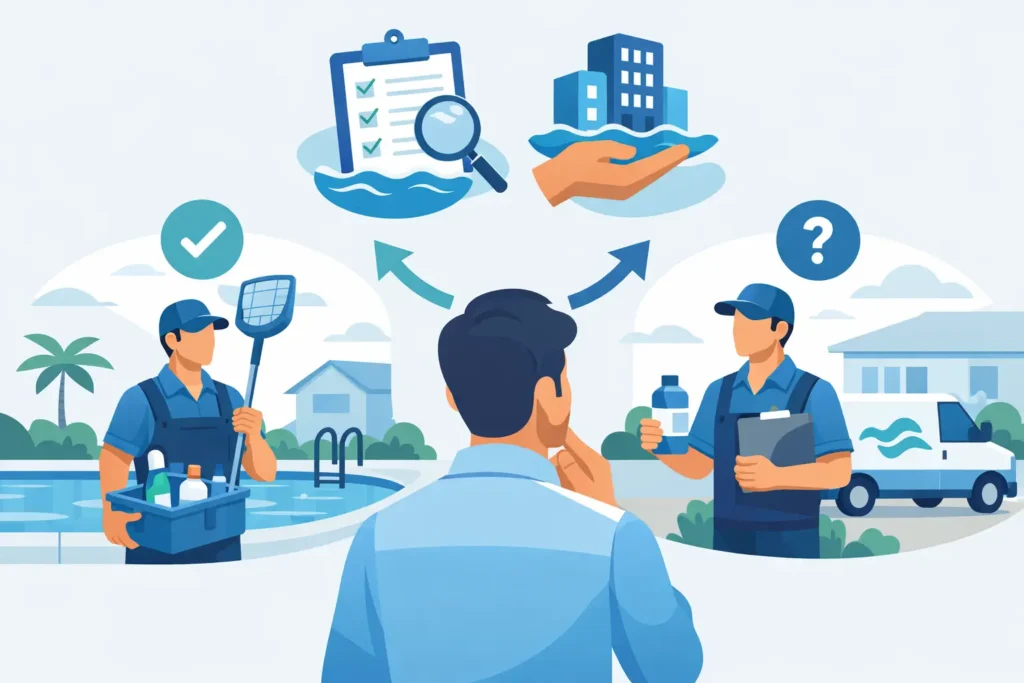
A pool can look clear on Monday and develop a chemical imbalance, clogged filter, or early equipment fault by the weekend. In hot climates and high-use properties, small maintenance gaps can quickly become costly repairs. If you are researching how to choose pool maintenance company services, focus on more than the monthly price. The right provider protects water quality, equipment performance, pool finishes, and the experience of everyone using the pool.
For homeowners, landlords, hotels, community managers, and commercial operators, pool care is an operational responsibility. A dependable contractor should bring qualified technicians, a defined service process, timely communication, and the capability to address both routine work and unexpected technical issues.
Start With the Scope of Pool Maintenance
Before comparing companies, define what your pool actually needs. A small residential pool with limited use may require a different visit schedule than a shared residential amenity, hotel pool, school facility, or commercial property. Size, bather load, surrounding landscaping, water features, and operating hours all affect the maintenance plan.
A proper proposal should state how often technicians will visit and what happens during each visit. Routine work typically includes skimming, vacuuming, brushing, checking water level, cleaning baskets, inspecting filtration, and testing water chemistry. It should also identify whether chemicals, consumable materials, emergency callouts, and minor repairs are included or billed separately.
Do not assume that an annual maintenance contract covers every issue. Many contracts cover preventive servicing while excluding replacement parts, major leaks, pump replacement, lighting repairs, and surface restoration. Clear scope prevents disagreements later and makes it easier to compare proposals fairly.
How to Choose a Pool Maintenance Company With Technical Depth
Water cleaning is only one part of professional pool maintenance. A pool is a working system of pumps, filters, valves, drains, electrical components, circulation lines, lighting, heating equipment, and control systems. The company you select should understand how these elements work together.
Ask how the provider identifies low circulation, pressure problems, recurring algae, unexplained water loss, noisy pumps, or poor filtration. A technician who only adds chemicals may temporarily improve the water appearance without resolving the underlying cause. Skilled diagnosis protects the pool from repeat failures and unnecessary chemical use.
This is particularly relevant for older pools. Aging plumbing, worn seals, damaged grout, loose tiles, failing waterproofing, and deteriorated coatings can affect performance and safety. A contractor with renovation, waterproofing, tile, and technical maintenance capabilities can assess the broader condition of the pool rather than treating every concern as an isolated cleaning task.
Look for a Consistent Water Testing Process
Water chemistry should be tested and adjusted based on actual readings, not guesswork. Ask what parameters the company checks, how results are recorded, and how it responds when readings fall outside the recommended range. Depending on the pool and its treatment system, this may include sanitizer levels, pH, alkalinity, calcium hardness, stabilizer, and total dissolved solids.
Consistent records are valuable for property managers and landlords. They show that maintenance is being completed, create a history of recurring issues, and help explain changes in water condition. For facilities with frequent users, documentation also supports a more accountable operating process.
Confirm Equipment Inspection Is Included
A clean pool can still have equipment operating inefficiently. During routine service, technicians should check pump operation, filter pressure, circulation, leaks, baskets, valves, electrical connections, and control settings. They should also identify signs that a component is approaching failure.
Preventive checks can reduce downtime. Replacing a worn seal or addressing abnormal pump noise early is usually less disruptive than responding after a complete system failure. Ask whether the company provides recommendations with clear explanations, including the urgency of the repair and the likely effect of delaying it.
Evaluate Reliability, Response Time, and Communication
Pool issues do not always occur during a scheduled visit. A sudden leak, cloudy water before an event, equipment trip, or overflowing pool needs a provider that can respond with a practical plan. Ask about emergency support, normal response times, and the process for reporting an urgent issue.
Reliability also shows up in routine details. Do technicians arrive within the agreed service window? Is there a designated contact person? Will you receive service reports, photographs, or repair recommendations after each visit? These details matter when you manage multiple properties or cannot be present during service.
A strong maintenance partner communicates directly. They should explain what was completed, what needs attention, the expected cost of additional work, and whether an issue affects pool availability. Vague updates such as “pool serviced” provide little assurance when equipment or water quality problems arise later.
Compare Proposals Beyond the Lowest Price
A low-cost proposal can be appealing, but it may leave out the work that keeps a pool stable over time. Compare the service frequency, labor hours, chemical policy, equipment checks, reporting, emergency coverage, exclusions, and repair rates. One provider may quote less because visits are shorter, testing is limited, or callouts are charged separately.
Ask for a written breakdown that makes the comparison straightforward. If a company cannot clearly explain its scope, schedule, and exclusions before the contract begins, it may be difficult to manage once service is underway.
Price should still be reasonable and transparent. The goal is not to select the most expensive contractor. It is to choose a company that offers appropriate service for the pool’s condition and use, with no hidden gaps that later become emergency expenses.
Check Experience With Your Type of Property
The needs of a private villa pool are not the same as those of a residential tower, office facility, hotel, or recreational venue. Ask whether the company has experience with properties similar to yours and whether its team can manage the access, safety, scheduling, and reporting requirements involved.
For commercial and shared pools, the provider should understand that downtime affects tenants, guests, and daily operations. Service scheduling may need to avoid peak-use hours. Repairs may require coordination with security, building management, or other contractors. A company accustomed to facility work is more likely to plan around those realities.
It is also useful to ask about related technical capabilities. Pool maintenance often intersects with electrical work, waterproofing, tile repair, painting, plumbing, and filtration upgrades. A one-stop technical contractor can simplify coordination when a routine maintenance visit reveals a larger issue.
Ask the Questions That Reveal Service Quality
A short conversation can reveal whether a provider works systematically or reacts only when problems become visible. Ask who will perform the service, how technicians are trained, and whether the same team is likely to attend your property. Continuity helps technicians recognize gradual changes in equipment performance and water behavior.
Also ask how the company handles recommendations. You should receive a clear explanation of the problem, the available repair options, and the consequences of waiting. Reliable contractors do not pressure clients into unnecessary upgrades, but they do address risks before they become expensive failures.
Finally, request references, recent project examples, or evidence of work on comparable pools where appropriate. Reviews can be useful, but the most valuable proof is a provider’s ability to explain its process, show accountability, and answer technical questions with confidence.
Choose a Partner for Long-Term Pool Performance
The best pool maintenance company is not simply a cleaning vendor. It is a technical partner that keeps the pool safe, presentable, and operational while helping you plan repairs before they disrupt your property. This is especially valuable when the pool is part of a larger building maintenance requirement.
Zillion Technical Services LLC supports pool annual maintenance, renovation, repair, waterproofing, tile work, and wider property upkeep through one coordinated service team. For property owners and facility managers, that approach reduces the burden of organizing separate contractors when a pool issue involves more than routine cleaning.
Choose a provider that documents its work, responds when conditions change, and has the technical capability to protect the full pool system. A well-maintained pool remains easier to operate, more enjoyable to use, and far less likely to demand an urgent repair at the worst possible time.
